
Last updated October 15, 2026
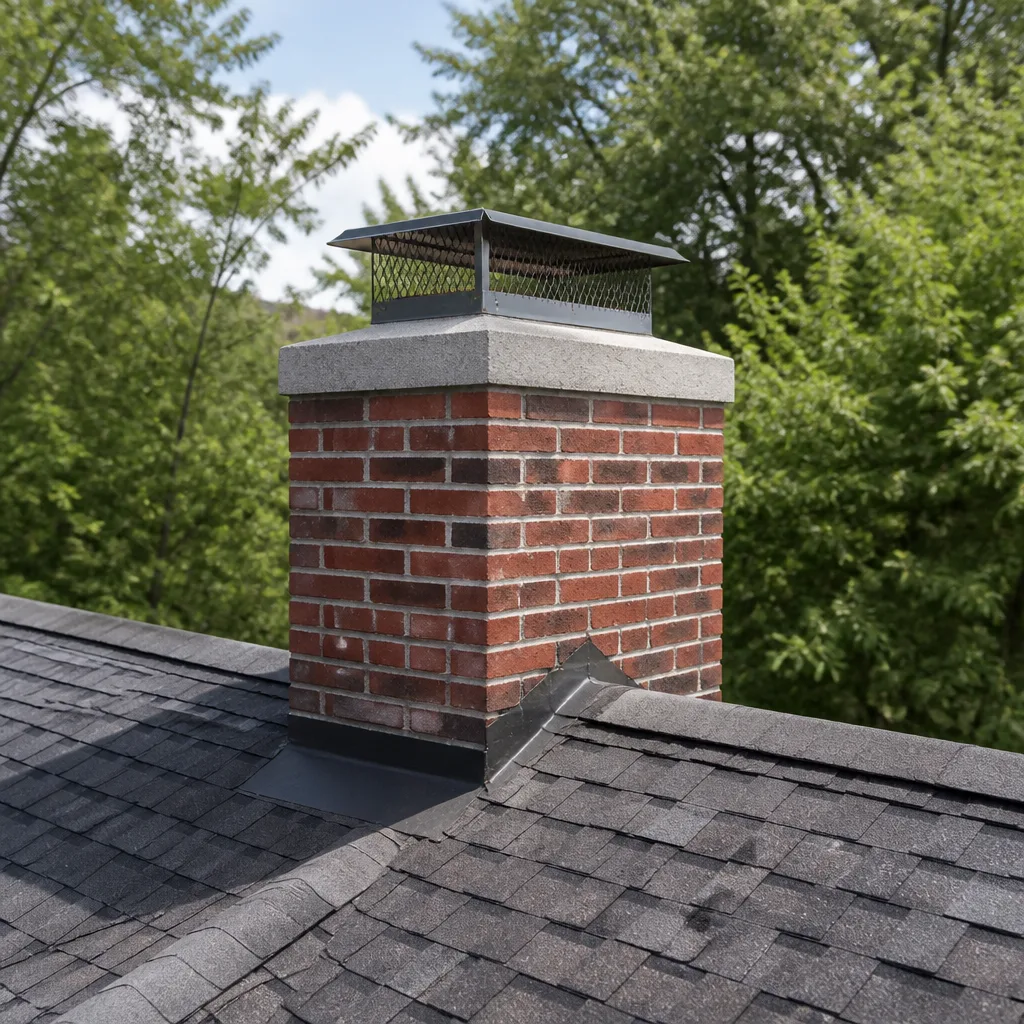 Sweep & inspection
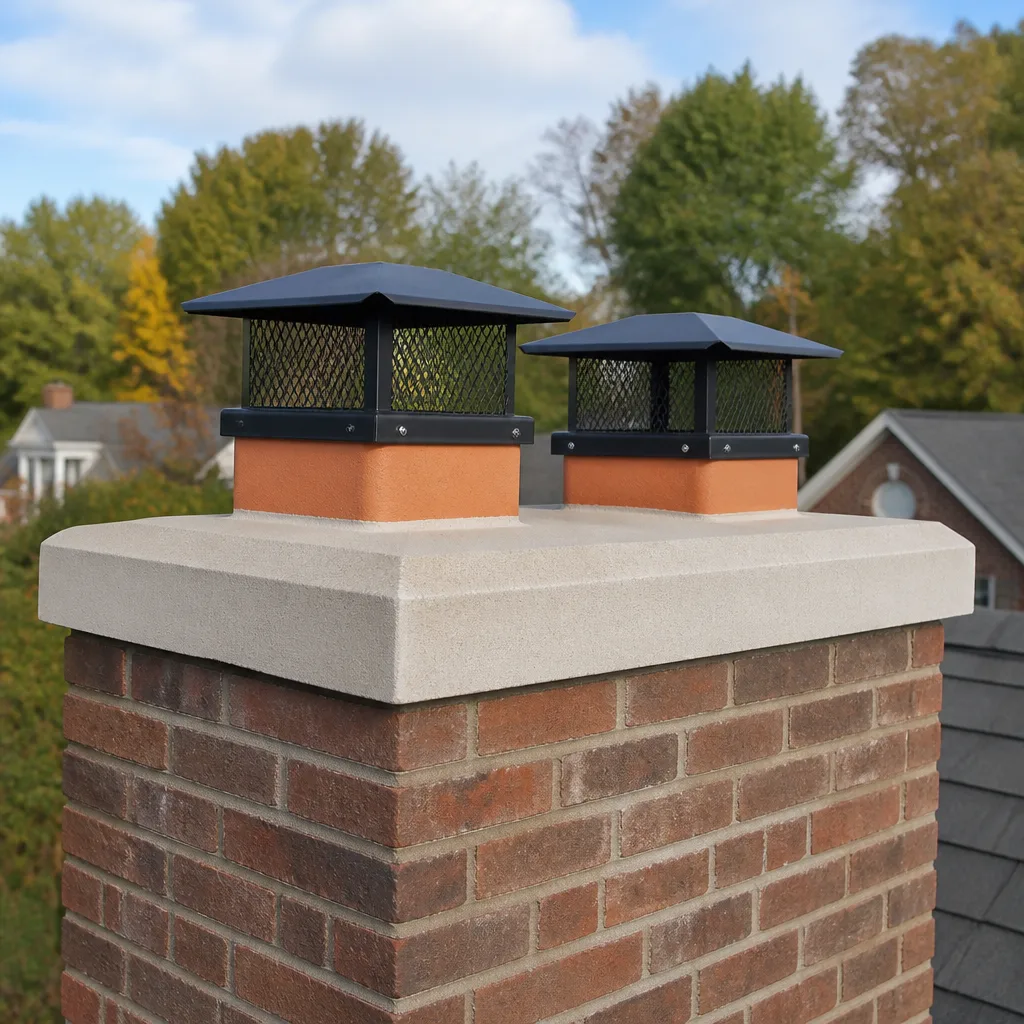 Caps & crowns
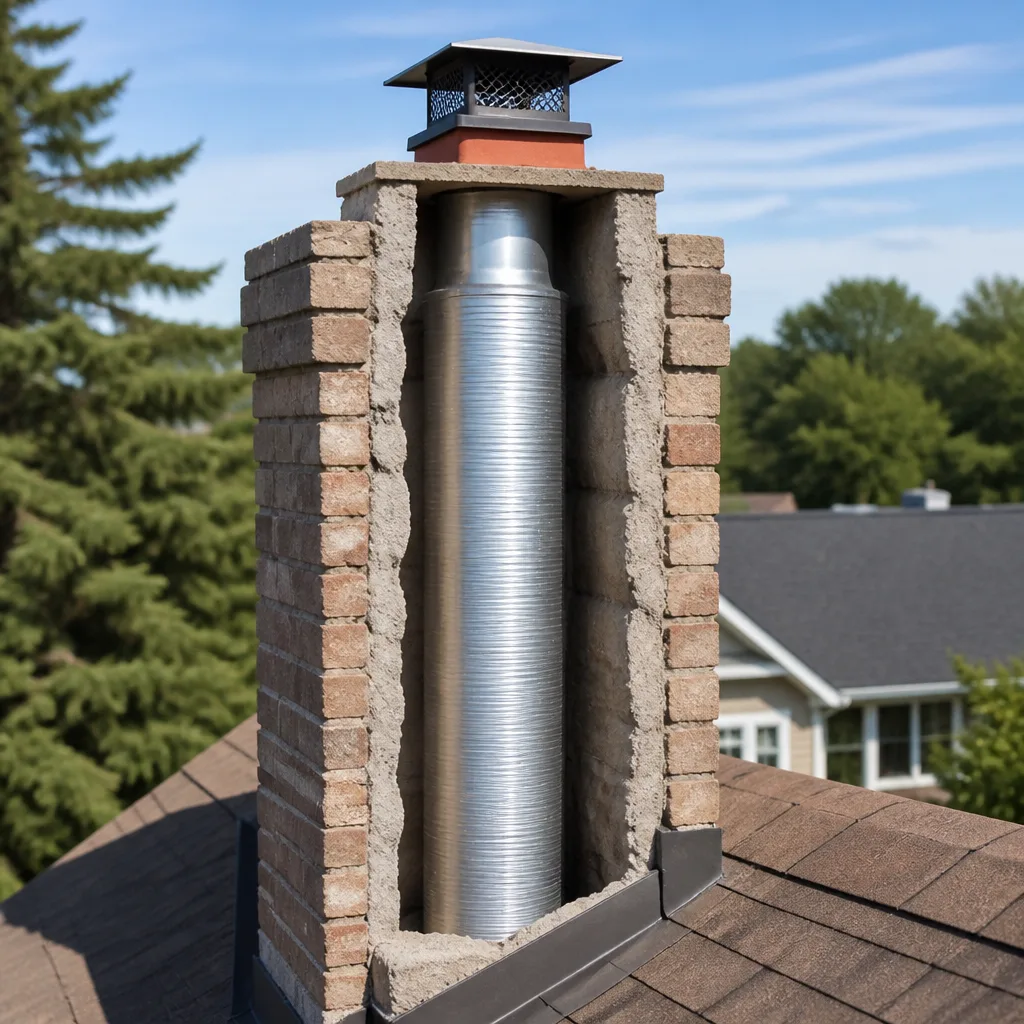 Flue relining
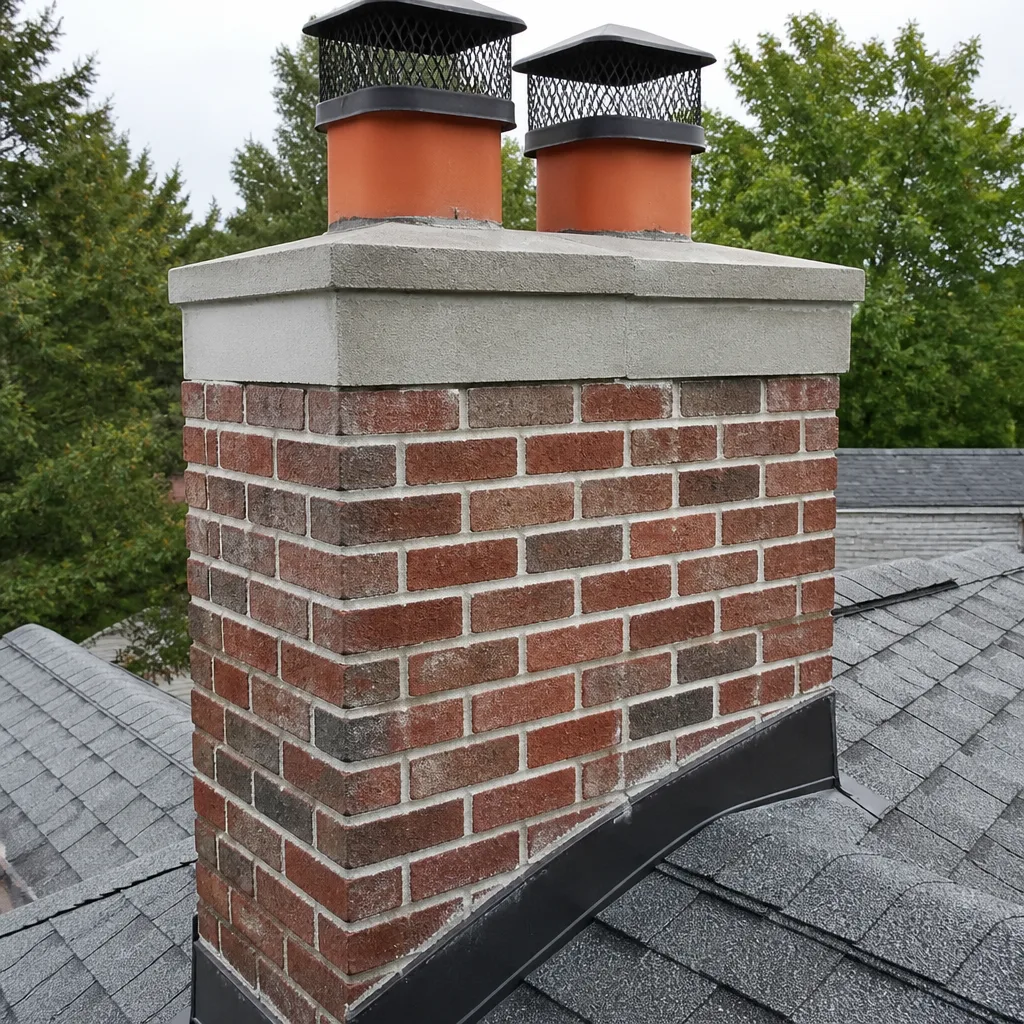 Masonry repair
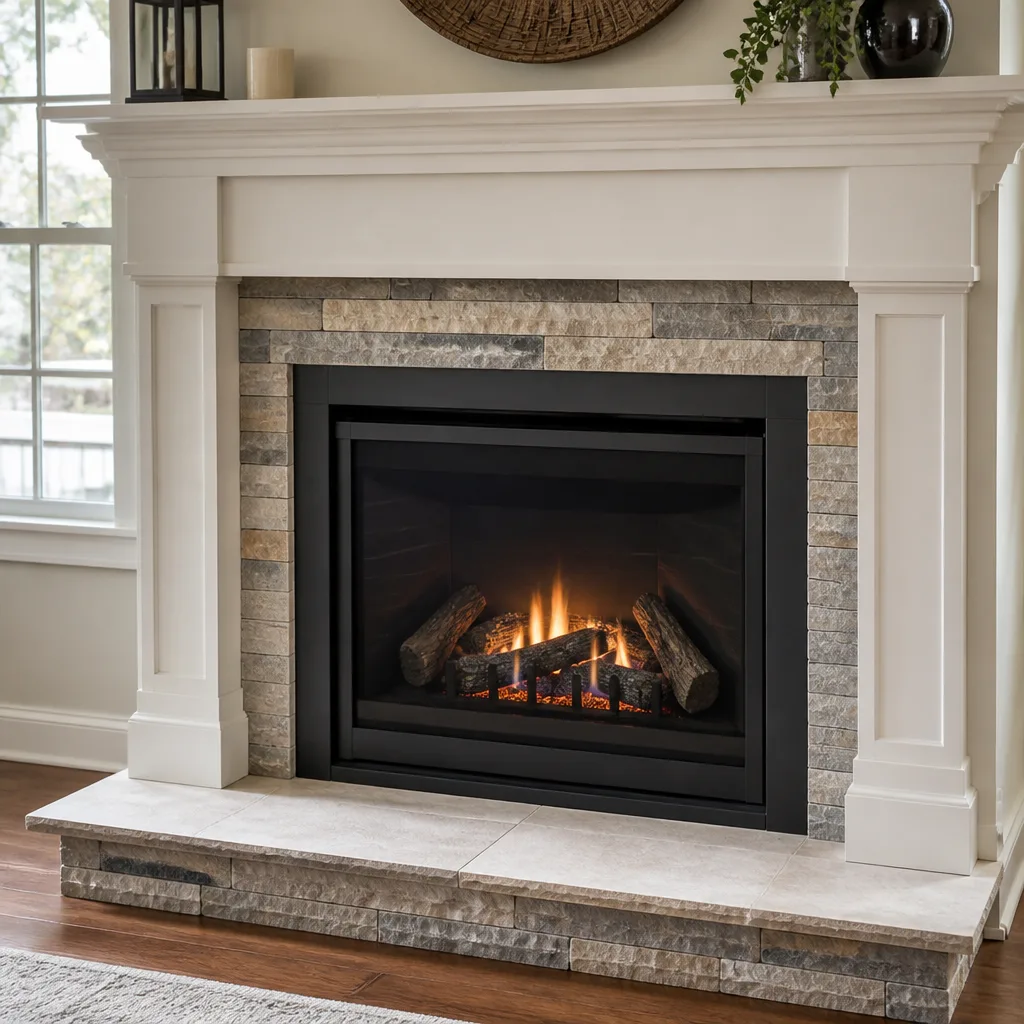 Gas fireplace service
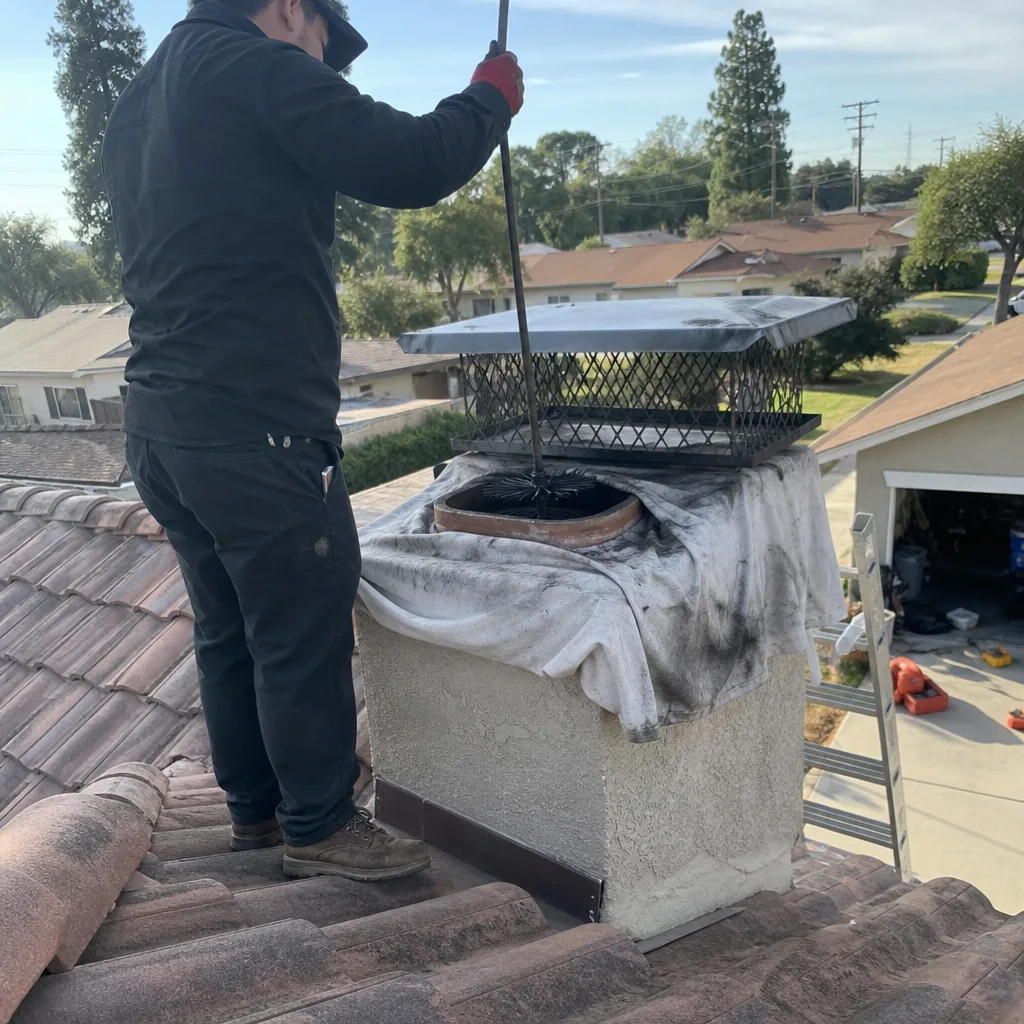
Level 1 sweep and inspection to the NFPA 211 annual standard - flue, crown, cap, and flashing checked and photographed
Chimney sweep logs do not sweep chimneys. They loosen some creosote - which then falls where a brush and vacuum still have to collect it.
How to Hire a Chimney Cleaning Contractor in West Covina: A Step-by-Step Guide
Here’s a fact most West Covina homeowners don’t know until it matters: there is no California state license for chimney sweeps. Anyone with a ladder, a brush, and a van can legally call themselves a chimney professional and start working on your flue today. That’s not a scare tactic, it’s the reality of the trade in 2026. So how do you actually separate a real pro from someone who watched two YouTube videos and bought a drop cloth? This guide walks you through the exact vetting process we’d recommend to a neighbor: the questions to ask before anyone books a visit, the red flags specific to West Covina, and the one trait that matters more than any credential – whether the contractor shows you evidence. For more guides & resources on keeping your home safe, explore our blog.
Quick Answer
To hire a chimney cleaning contractor in West Covina, ask five specific questions before booking: Will I get a written quote before work starts? Do you send before-and-after photos? What do you actually inspect beyond sweeping? Are your techs background-checked and uniformed? Is your repair work guaranteed in writing? A contractor who answers all five clearly – with a written price, photo documentation, and a written guarantee – is worth hiring. A contractor who hesitates on any of them should be crossed off the list.
Styles & brands we work with
Table of Contents
- Why Licensing Isn’t Enough in West Covina
- The Five Questions to Ask Before You Book
- What CSIA Certification Actually Means (and What It Doesn’t)
- Red Flags Specific to West Covina
- How to Compare a $99 Sweep to a $250 Sweep
- The Arrival Window Problem: Spotting Time-Wasters Before They Show Up
- What a Real Chimney Inspection Should Include
- After the Sweep: What You Should Walk Away With
Why Licensing Isn’t Enough in West Covina
Most trades in California have a licensing board. Electricians have the CSLB. Plumbers, roofers, HVAC techs – all regulated. Chimney sweeps? No state license exists. The Chimney Safety Institute of America (CSIA) offers certification, which is the closest thing the industry has to a credential, but it’s voluntary. Some West Covina chimney companies have it. Some don’t. The one you hire should. For details on local requirements, read Chimney Cleaning Permits, Codes & Inspections in CA: What You Need to Know.
But here’s what years in this trade teaches you: a certification proves someone passed an exam. It doesn’t prove they’ll show up when they say they will, charge what they quoted, or show you photographic proof of the work. Those things come down to how the business operates, not what certificate hangs in the office. That’s why we tell homeowners to vet for transparency first and credentials second. A CSIA-certified sweep who gives you a verbal quote and no photos is still a gamble. An uncertified sweep who hands you a written scope before starting and a photo report after is, in our experience, more trustworthy than the certified one hiding behind a vague invoice.
The Hadley Chimney West Covina home approach is built on this exact principle: we’d rather show you the creosote than tell you about it. Creosote, by the way, is the flammable tar-like buildup that forms when wood smoke condenses inside your flue. It’s the thing a sweep exists to remove, and it’s very photogenic. If a contractor won’t photograph it for you, you have to ask why.
The Five Questions to Ask Before You Book
You don’t need a technical background to vet a chimney contractor. You need five questions. If they answer these well, the technical competence is almost certainly there. If they dodge, deflect, or get vague, thank them for their time and move on.
- “Will I receive a written quote before any work begins?” – This is the non-negotiable one. A verbal quote is not a quote. It’s a suggestion. What you want is a written scope: what they’ll do, what it costs, and what’s outside the scope if they find something unexpected. Chimney work is full of scope creep. “While I’m up there, I noticed your flashing needs…” should never be the first time you’re hearing about a repair. A written price before work starts means you decide with a clear head, not with a technician standing in your living room.
- “Do you send before-and-after photos?” – This question alone filters out about half the chimney companies in West Covina. The technology to photograph a flue costs a few hundred dollars. Any company unwilling to invest that much in transparency is telling you something about how they operate. A sweep that can’t show you the creosote before removal and the clean flue after is asking you to take their word for it. You wouldn’t hire a mechanic who refused to show you the old brake pads. Same logic applies here.
- “What do you actually inspect beyond the sweep itself?” – A chimney cleaning that doesn’t include an inspection is just brushing. The sweep should check the liner (the inner pipe that contains the fire and exhaust), the firebox (the chamber where the fire actually burns), the damper (the metal door that opens and closes the flue), the flashing (the metal seal where the chimney meets the roof), the chimney cap, and the mortar joints. If their inspection list is shorter than a paragraph, walk.
- “Are your technicians background-checked and uniformed?” – You’re inviting a stranger into your home, often when you’re not entirely sure who’s showing up. A company that background-checks its staff and puts them in uniforms is signaling that they run a real business with real liability. A guy in a t-shirt with a magnet on his truck door is not a company. He’s a person with a brush.
- “Is your repair work guaranteed in writing?” – Sweeps rarely need guarantees. Repairs absolutely do. Ask what happens if a repair fails. The answer should be specific: a written guarantee with a defined term and a defined remedy. “We’ll make it right” is not a guarantee. “Every repair comes with a written guarantee and a free second visit if the repair fails, for 365 days” is a guarantee. The 365-Day Done Right Promise at Hadley is exactly this: if it’s not done right, we make it right, backed by a written guarantee on every repair and a free second visit if the repair fails. That’s what a real answer sounds like.
One more thing worth saying: ask these questions over the phone before booking, not when the tech is already at your door. The answers tell you more about the company than any online review could.
What CSIA Certification Actually Means (and What It Doesn’t)
The CSIA, or Chimney Safety Institute of America, is the primary certifying body for chimney sweeps in the United States. Getting certified means passing a written exam on chimney codes, fire dynamics, inspection standards, and safety practices. It’s not a weekend course. The exam is substantial, and maintaining certification requires continuing education. A CSIA-certified sweep has demonstrated real knowledge. That part is legitimate.
But here’s what certification doesn’t guarantee: it doesn’t mean the sweep will show up on time. It doesn’t mean the quote you get on the phone will match the final invoice. It doesn’t mean the company does background checks on all employees, not just the owner who took the exam. It doesn’t mean they’ll photograph the interior of your flue and share the images with you. Certification is a knowledge credential. It is not an operations credential.
The way to think about it: certification is necessary but not sufficient. You want it, yes. But you also want the five questions above answered to your satisfaction. A certified sweep who can’t tell you what a camera inspection costs is less useful than an uncertified sweep who sends you a written scope and a photo report from your last cleaning. The ideal is both: certified knowledge and transparent operations. That’s the bar in West Covina.
Red Flags Specific to West Covina
West Covina has its own particular chimney solicitation patterns. Here’s what we’ve observed over the years and what you should watch for.
The Santa Ana door-to-door surge. After a strong Santa Ana wind event, you’ll notice more door knockers offering chimney “inspections” or “storm damage checks.” Some are legitimate. Many are not. The pattern: a crew works a neighborhood, finds “damage” on every third roof, and offers a can’t-miss price to fix it that day. What they’re often finding is normal wear that a legitimate sweep would tell you can wait, not emergency damage from the wind. Legitimate chimney companies in West Covina don’t need to door-knock after wind storms. The phone rings on its own.
Fire-season fear pricing. Every fall, as the first burn-season warnings hit the local news, the fear-cycle companies appear. “Your chimney is a fire hazard, get swept now for $99!” The $99 is the hook. What happens after they’re on your roof is where the price climbs. That’s not to say chimney sweeping isn’t a real fire-safety service – it absolutely is. Creosote buildup is a genuine ignition risk. The issue is companies that use fire fear to get in the door and then inflate once the tech is already there. A written price before work starts eliminates this entire dynamic.
The “I was in your area” landlord special. West Covina has a solid stock of 1960s and 1970s ranch homes, many of which have original chimneys that genuinely need maintenance. Some solicitors target these older homes specifically, betting the homeowner will hear “your chimney has 50 years of buildup” and panic. A 50-year-old chimney does need attention. But the finding needs photo evidence, a written scope, and the option to get a second opinion. Any contractor who doesn’t want you thinking about it overnight is selling pressure, not service.
How to Compare a $99 Sweep to a $250 Sweep
Chimney sweep pricing in the West Covina market typically lands between $99 and $250 for a standard cleaning, with the average hovering around $150 to $200. The gap between the low and high ends isn’t random. It’s what’s included. For a detailed breakdown, see our Chimney Cleaning Cost Breakdown: The West Covina Homeowner’s Reference for 2026. Here’s how to compare quotes apples-to-apples.
- The $99 sweep. Usually covers the basic brushing of the flue. It may not include a full inspection of the liner, firebox, damper, flashing, cap, and mortar joints. It often doesn’t include photos. It’s a cleaning service, not a safety inspection. You’re buying a labor hour, not an assessment. Fine, if that’s all you want and you’ve had the chimney properly inspected recently. Less fine if this is your first sweep in five years and you have no idea what condition the liner is in.
- The $250 sweep. At this price, you should expect the full package: complete flue brushing, a full multi-point inspection with written findings, photo documentation of the interior, and a written report. Some companies at this tier include minor items the $99 sweep would upcharge for, like tightening the damper or cleaning the visible portions of the firebox. The $250 is buying an assessment, not just a brushing.
- What to ask about both quotes. Get a written scope. What does the sweep include? What does the inspection cover? Are photos included? Is there a separate charge for the camera inspection? What’s the price if they find something that needs repair – is the repair quoted separately in writing before any work is done? A $99 sweep that turns into a $600 repair with no written scope was never $99.
- The middle path. Most West Covina homeowners do best with a company that charges a fair rate, includes the full inspection and photos, and gives you a written price before work starts. That’s the sweet spot. At Hadley, our Chimney Sweep in West Covina rates always come with a written price before any work begins and photo documentation after. No surprises at the door, because the price was in your hands before the brush was in ours.
The Arrival Window Problem: Spotting Time-Wasters Before They Show Up
Four-hour arrival windows are the chimney industry’s worst habit. “We’ll be there between 8 and noon” means you’re home all morning, unable to run errands, watching for a truck. It’s 2026. It doesn’t have to work this way.
There’s a newer standard, and it’s called The Relay Visibility Guarantee. It’s the system Hadley operates under as part of the Relay Home Co. family. Here’s what it means in practical terms: live arrival times, like the tracking you get from a rideshare. Before-and-after photo documentation on every visit. Digital invoicing you can pay from a link. A written price before work begins. These aren’t premium add-ons. They’re the operating baseline.
When you’re comparing chimney companies in West Covina, ask what their arrival window is. A four-hour guess is the old standard. A tracked arrival with a live ETA is the new one. The difference matters more than most people realize, because a company that respects your time on scheduling day is usually a company that respects your home once they’re inside it. The habits tend to run together. A company willing to make you wait four hours is often the same one willing to give you a verbal quote and hope you don’t ask for photos. Time-wasting and opacity are the same disease, just with different symptoms.
Hadley operates under The Relay Visibility Guarantee on every visit, not just the big jobs. Live arrival tracking, photo documentation, written price before work starts. If that doesn’t happen, the guarantee didn’t. Hold every contractor to that standard.
What a Real Chimney Inspection Should Include
You hire a sweep to clean. You should get an inspection as part of it. Here’s what a competent chimney cleaning in West Covina should cover, top to bottom.
- Chimney cap. The metal cover on top of the flue that keeps rain, birds, and debris out. A good tech checks for rust, blockages, and whether the spark arrestor (the wire mesh that stops embers from escaping) is intact. Missing or damaged caps are the number one cause of water damage in chimneys.
- Flue liner. The pipe inside the chimney that carries smoke up and out. Liners crack over time, especially if the chimney has heated and cooled through 30 or 40 West Covina summers and winters. A compromised liner is a fire and carbon monoxide risk. This is also where a camera inspection matters most – it’s the only way to see the interior of the flue without taking things apart.
- Firebox. The brick chamber where your fire actually burns. A competent tech looks for cracked bricks, deteriorated mortar, and panel gaps. Firebox damage is common but often repairable with the right materials. We use HeatShield ceramic repair compound, which is the product most chimney professionals trust for resurfacing fireboxes. It holds up to repeated heating and cooling far better than a patch job with whatever’s in the truck.
- Damper. The metal plate that opens and closes to control airflow. A damper that doesn’t seat properly lets conditioned air escape when the chimney isn’t in use – which is 90% of the year in West Covina’s mild climate. A quick adjustment or replacement can pay for itself in reduced energy waste.
- Flashing. The metal seal where the chimney meets the roofline. This is a common failure point, especially after heavy rain years. Flashing leaks usually show up as water stains on the ceiling near the chimney, not as obvious roof damage. A proper inspection includes checking the flashing condition and the sealant around it.
- Mortar joints and brickwork. The exterior masonry. California’s dry heat and occasional heavy rain cycles are hard on mortar. Loose or missing mortar lets water into the brick, which then spalls and cracks over freeze-thaw cycles – rare in West Covina but not impossible at higher elevations nearby. Catching mortar issues early is always cheaper than repointing an entire chimney later.
Everything we use is built to last: Gelco chimney caps, Olympia Chimney flashing components, Copperfield accessories. No contractor should be grabbing generic parts off the shelf. The materials matter as much as the workmanship, and the best materials cost a few dollars more but last a decade longer.
After the Sweep: What You Should Walk Away With
When the tech leaves, you should have three things in hand. First, a written report of what was found, whether the chimney is safe to use, and what work was done. Second, photo documentation of the before and after. Third, a clear recommendation, in writing, if something needs attention – and whether that attention is urgent or can be scheduled. A contractor who leaves you with less than this didn’t do the job.
The “can wait” conversation matters. We tell customers plainly when work can safely be postponed: a small crack in the firebox can often wait until spring; a hairline liner crack might be fine for this burn season with monitoring; a missing chimney cap should be fixed before the next rain, but not necessarily this week. You deserve honest triage, not a list of everything that could theoretically be addressed. Any contractor pushing for immediate work without photo evidence isn’t triaging. They’re selling.
For repairs, expect a written scope of work and a written guarantee. At Hadley, every Chimney Repair in West Covina includes a written guarantee and a free second visit if the repair fails within 365 days. If a contractor can’t tell you, in writing, what the guarantee covers and for how long, you don’t have a guarantee. You have a handshake.
Common Mistakes to Avoid
- Booking without asking about a written quote. A verbal estimate is the single biggest predictor of an inflated final invoice. Get it in writing before work begins, every time, no exceptions.
- Skipping the photo documentation question. If they can’t show you the creosote before and the clean flue after, they can’t prove they did anything. Camera inspection equipment is cheap. Refusal to use it is not a budget issue.
- Hiring door-to-door solicitors after Santa Ana events. Legitimate West Covina chimney companies rarely knock doors. The post-wind-storm canvassers are often out-of-area crews looking for one-day revenue, not long-term customers.
- Comparing quotes on price alone. A $99 sweep and a $250 sweep are not the same service. Compare what’s included: inspection, photos, written report, guarantee. The cheapest quote is often the most expensive chimney.
- Not reading the guarantee terms. “Satisfaction guaranteed” is not a term. “365 days, written, free second visit if the repair fails” is a term. Read the actual words.
- Treating certification as a complete vetting tool. CSIA certification is good. It’s not enough. The five questions in this guide matter more than any logo on a website.
- Accepting a four-hour arrival window without pushback. If a company can’t give you a live arrival time in 2026, what else are they behind on? Time-wasting and opacity travel together.
See the difference
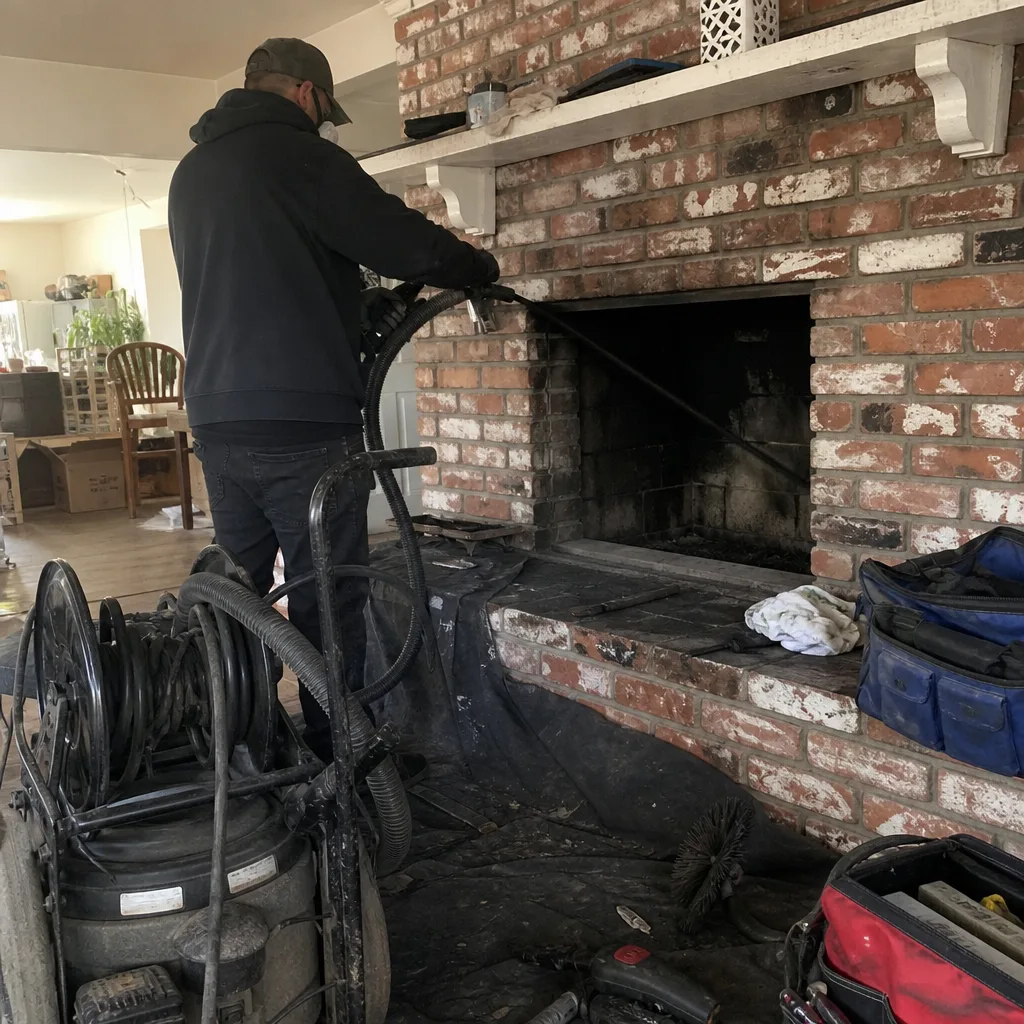 Before
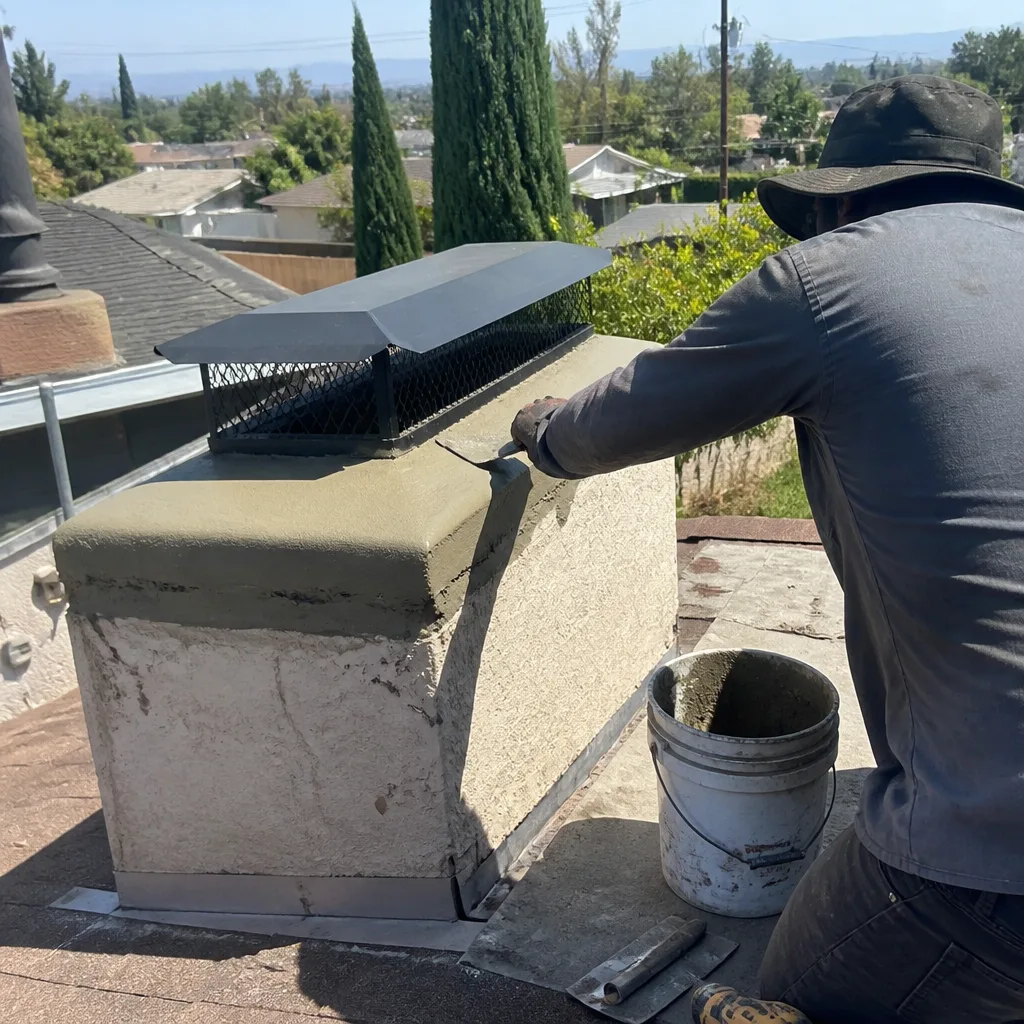 After
After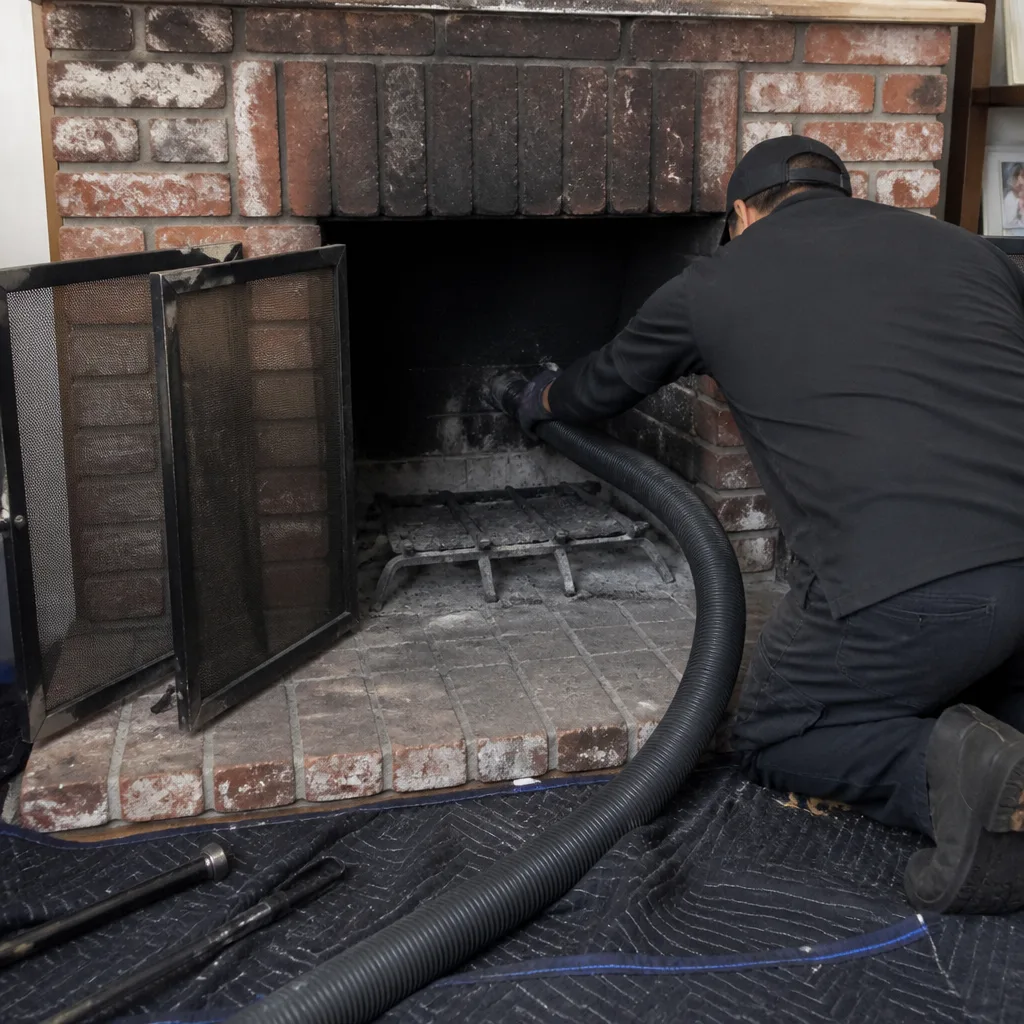 Before
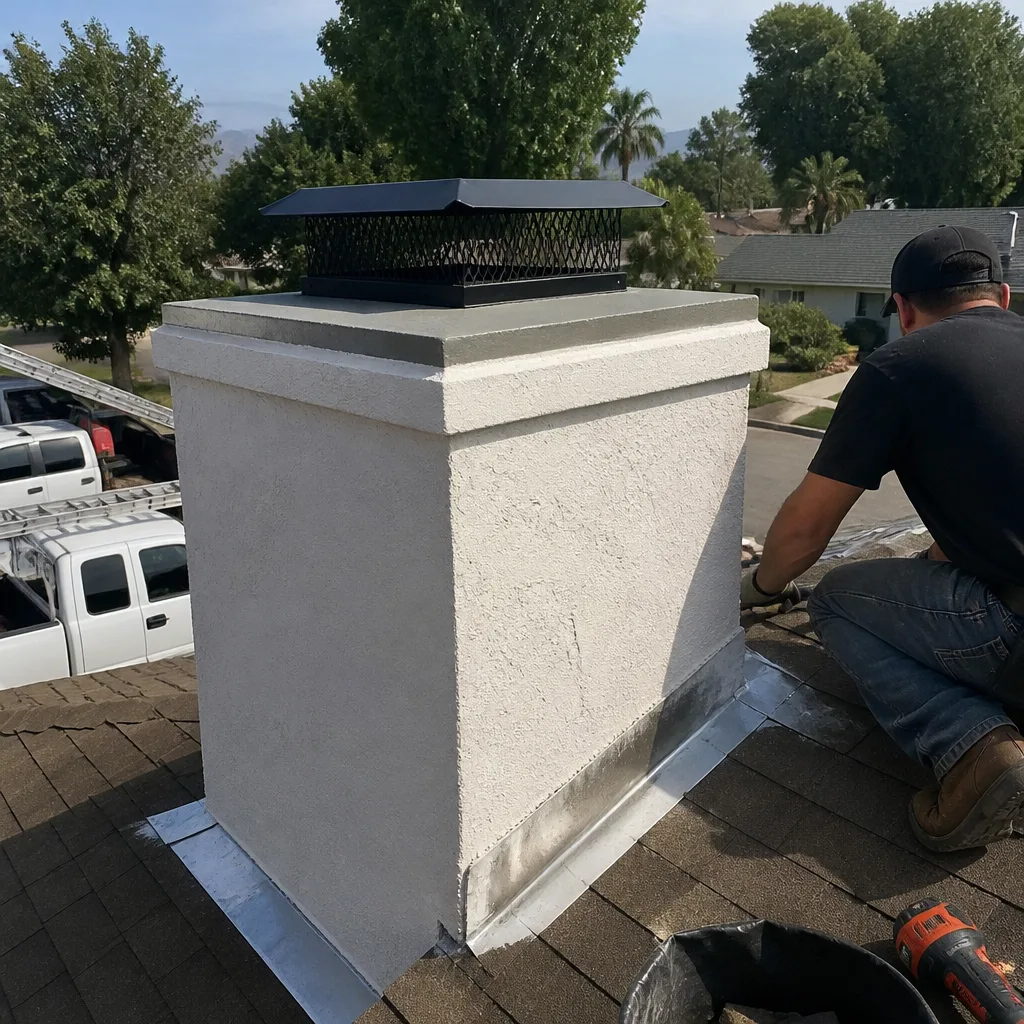 After
After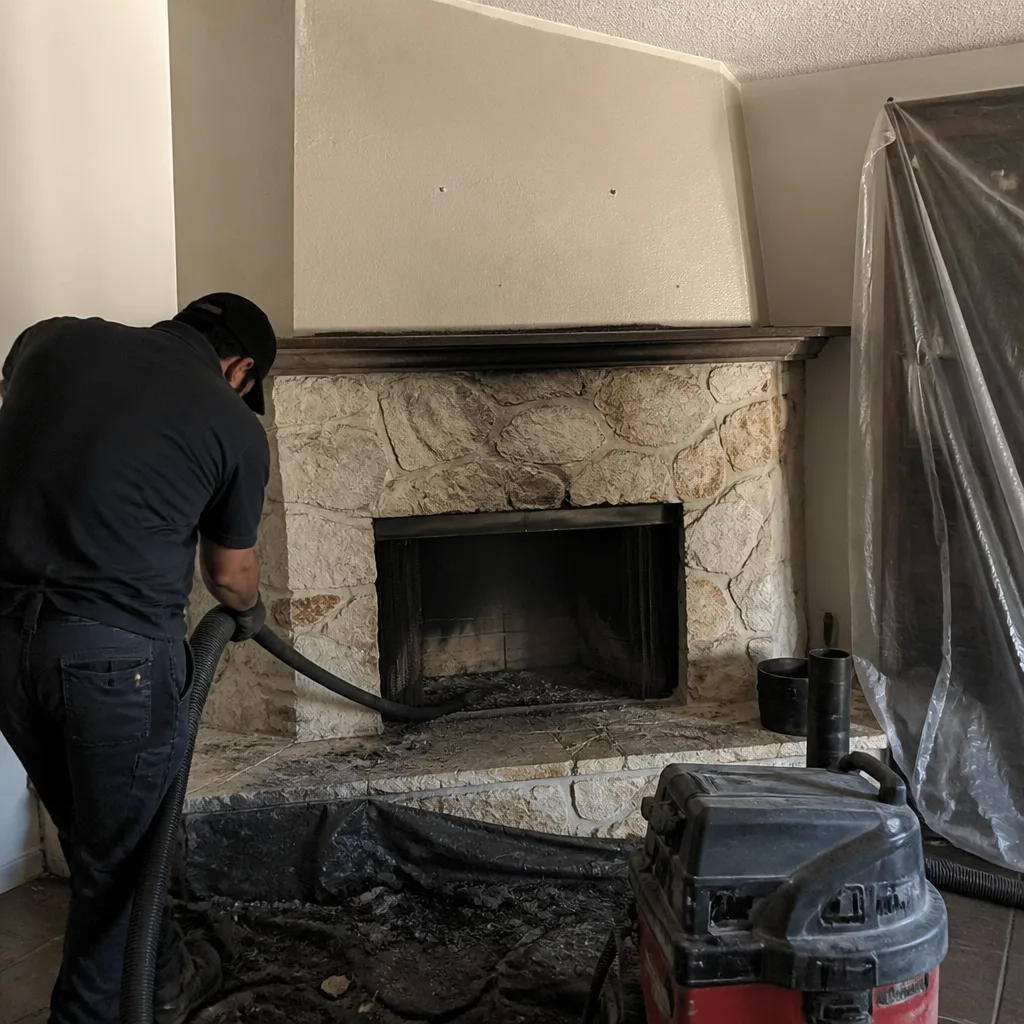 Before
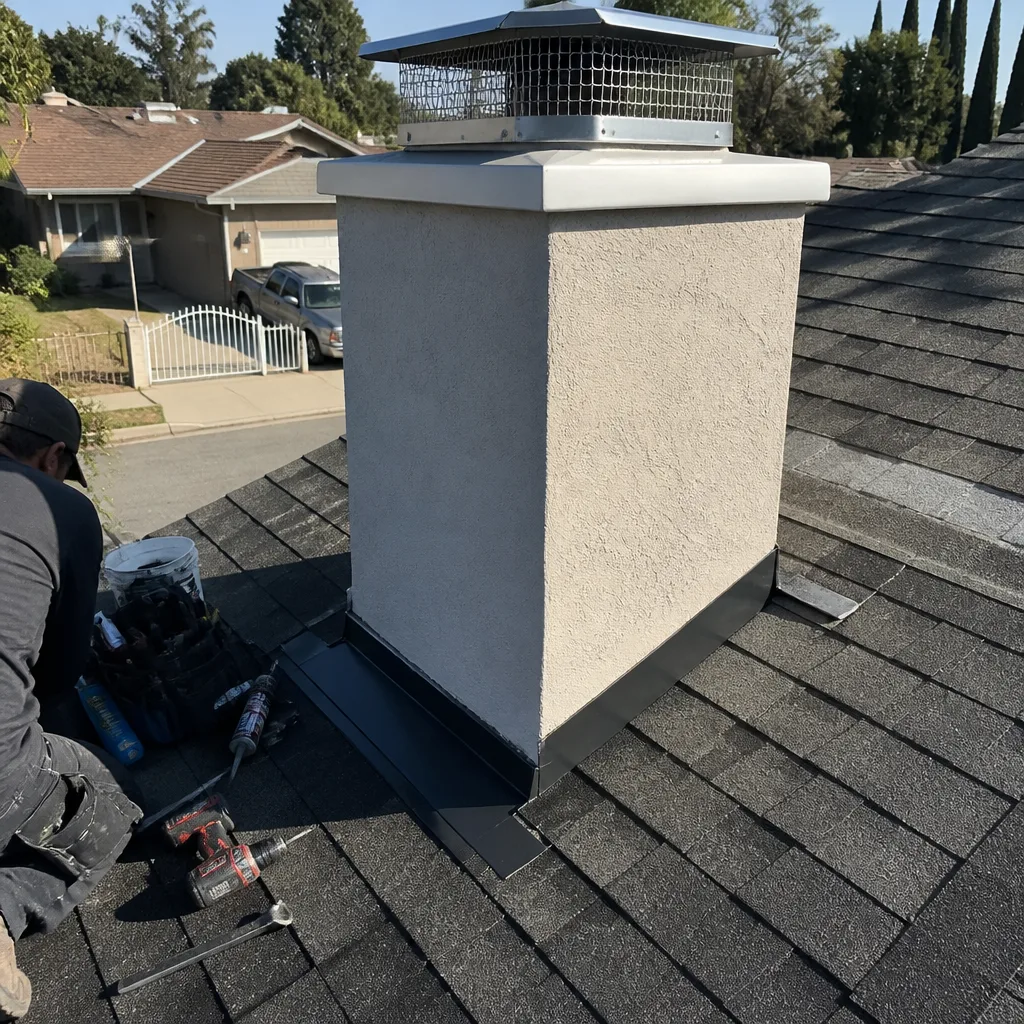 After
AfterWhen to Call a Professional
You’re due for a sweep if you’ve used your fireplace at least once a week during burn season and haven’t cleaned in a year. You’re overdue if you smell a campfire-like odor when the fireplace isn’t in use – that’s creosote buildup. You should call immediately if you see black, tar-like residue inside the firebox, hear an odd draft, see water stains near the chimney, or your carbon monoxide detector has gone off at any point while burning. Those are not “schedule it sometime” issues.
Hadley Chimney West Covina offers free estimates in West Covina and surrounding areas. Call (661) 402-9036 for a same-week appointment with a written price before any work begins.
Frequently Asked Questions
A standard chimney sweep in West Covina typically runs between $99 and $250, with the cost depending on what’s included in the scope. A basic brushing at the lower end may not include a full inspection or photos. A $150 to $200 sweep usually includes the full cleaning, a multi-point inspection, and photo documentation. Call (661) 402-9036 for a written quote specific to your chimney – estimates are free.
The CSIA recommends a sweep at least once per year if you burn regularly, and so do we. The buildup rate depends on what you burn: soft woods like pine create creosote faster than seasoned hardwoods. If you burn more than three times a week during the season, you may want a mid-season check. West Covina’s mild winters mean lower usage than colder climates, but annual is still the right rhythm.
Only if the existing liner is actually damaged, which a camera inspection will show. We recommend liner replacement only when the photo evidence shows cracks, gaps, or deterioration that poses a fire or carbon monoxide risk. We use DuraFlex flexible liner systems when replacement is genuinely needed – they’re the industry standard for a reason. If a contractor recommends a new liner without showing you camera footage, get a second opinion.
Creosote keeps building up. That’s the flammable tar that forms when smoke cools and condenses inside the flue. Enough buildup and the chimney becomes a fire risk: a hot fire ignites the creosote, and now you have a chimney fire on your hands. Even short of that, heavy buildup can block airflow, pushing carbon monoxide back into the house. These are preventable outcomes. A yearly sweep prevents both.
You can buy a DIY chimney brush kit from a hardware store. But without a proper inspection, you won’t know if your liner is cracked, your damper is loose, or your flashing is leaking. Those are the things that actually cause problems. DIY cleaning without inspection is like brushing your teeth without ever seeing a dentist. The brush helps, but it doesn’t find the cavities. Call (661) 402-9036 and let a trained professional with a camera do both.
Yes. Gas fireplaces don’t need sweeping the way wood-burning ones do, but they do need regular inspection and service: checking the gas valve, the pilot assembly, the logs, and the venting. Our Gas Fireplace Repair in West Covina service covers all of it, with the same written price and photo documentation as every other job.
The Bottom Line
Hiring a chimney cleaning contractor in West Covina comes down to one trait: transparency. There’s no state license to lean on, so the evidence matters more than the credential. A contractor who gives you a written price before starting, sends you before-and-after photos, and puts the repair guarantee in writing is the one to hire. A contractor who can’t or won’t do those three things is, at best, a gamble. At Hadley, that’s our entire operating model: written quotes, photo documentation, live arrival tracking, and the 365-Day Done Right Promise behind every repair. It’s not complicated. It’s just what the trade should have been doing all along.
Written by Cory Mitchell, Owner at Hadley Chimney West Covina, serving West Covina since 2003.