
Last updated October 15, 2026
 Sweep & inspection
 Caps & crowns
 Flue relining
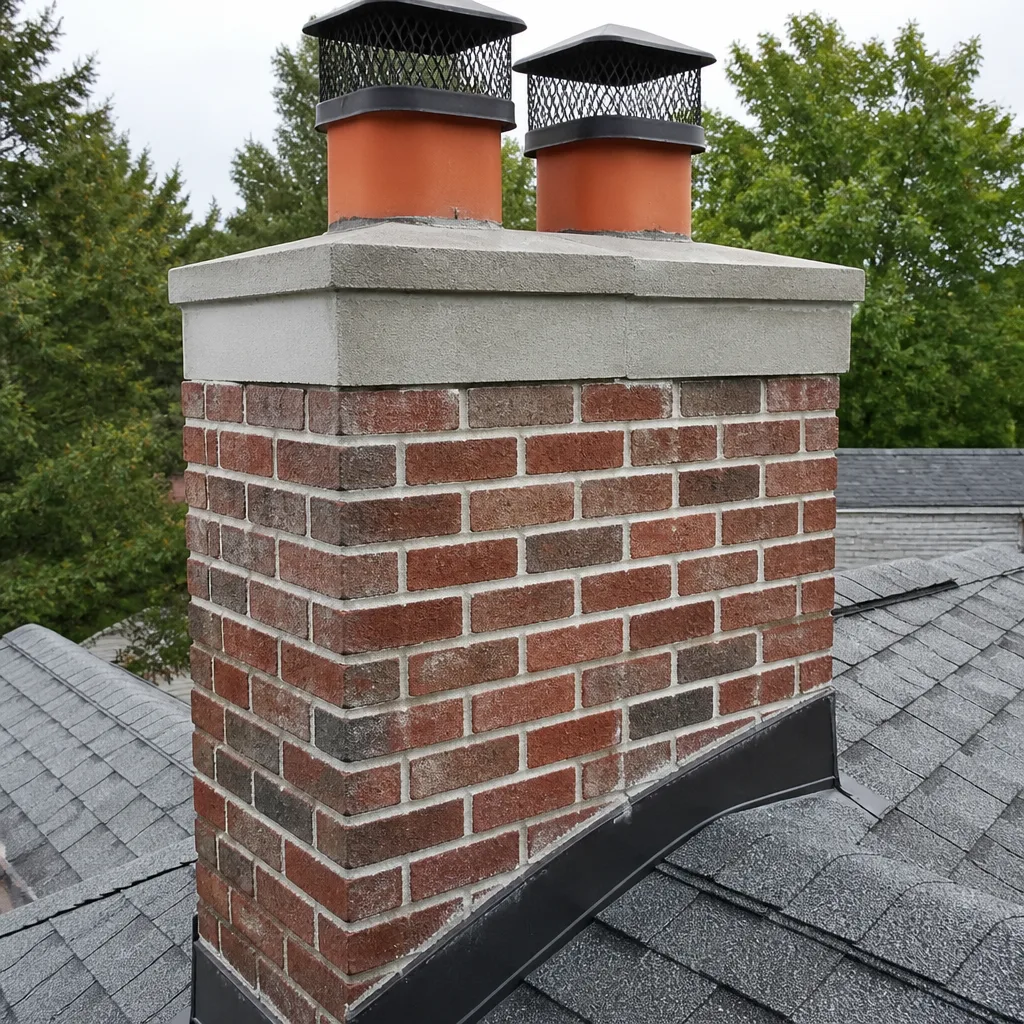 Masonry repair
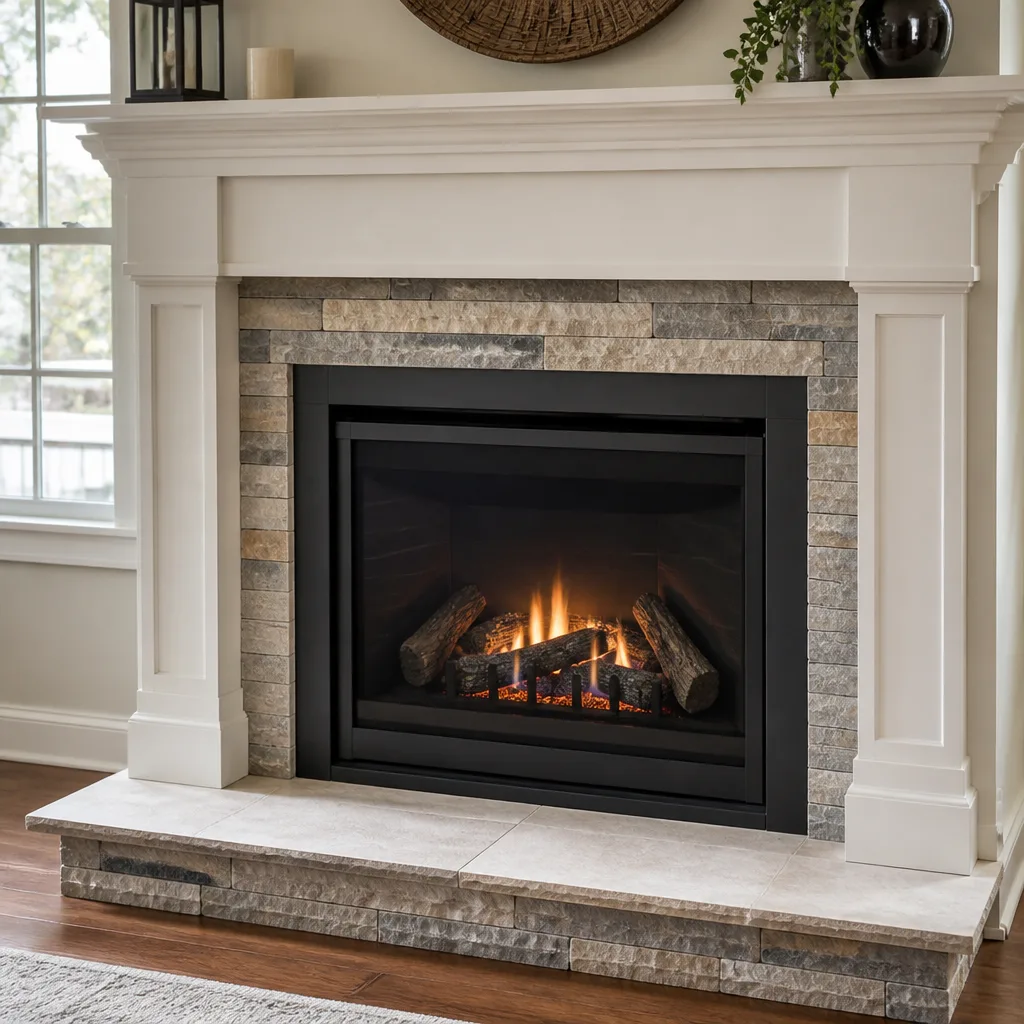 Gas fireplace service
Level 1 sweep and inspection to the NFPA 211 annual standard - flue, crown, cap, and flashing checked and photographed
Chimney sweep logs do not sweep chimneys. They loosen some creosote - which then falls where a brush and vacuum still have to collect it.
Seasonal Chimney Cleaning Care for West Covina: Year-Round Homeowner’s Guide
The single month most West Covina homeowners ignore their chimney is October. Right before Santa Ana winds push fire risk to its annual peak. Because summer felt like there was nothing to do, and the fireplace sat cold for six months, so it must be fine. But the chimney doesn’t reset itself. Creosote from last winter is still there, cracks from the last rain event haven’t healed, and whatever moved in over the spring is still using your flue as a studio apartment. This guide walks through what actually needs attention each part of the year in West Covina, and when to do it, with Chimney Cleaning Warning Signs: A West Covina Homeowner’s Reference Guide as a companion resource.
Styles & brands we work with
Quick Answer
West Covina doesn’t have four chimney seasons. It has three: pre-fire-season prep from August through September, a post-rain check in February and March, and an idle-season watch from April through July when most damage quietly accumulates. Schedule your sweep in August, check your cap after every wind event, and watch your masonry during the marine-layer months. That’s the whole year in one sentence.
Table of Contents
- The Three Chimney Seasons of West Covina
- Phase One: Pre-Fire-Season Prep (August – September)
- What Santa Ana Winds Do to Chimney Caps and Mesh
- Phase Two: Post-Rain Check (February – March)
- Marine-Layer Moisture and Masonry Damage
- Phase Three: Idle-Season Liner Monitoring (April – July)
- Off-Season Animal Intrusion: What It Looks Like
- Common Mistakes to Avoid
- When to Call a Professional
- Frequently Asked Questions
The Three Chimney Seasons of West Covina
Most chimney maintenance calendars are written for places with frost, snowfall, and a defined “burning season.” West Covina doesn’t have that. What we have is a fire-risk window driven by wind and dryness, a wet season that’s short but hard on exposed masonry, and a long idle stretch where nothing visible happens but plenty goes wrong out of sight. Planning around these three phases makes a lot more sense than following a generic Northeast calendar that tells you to “schedule in the fall.”
Here’s what the year actually looks like for a chimney in West Covina:
- August through September: pre-fire-season preparation. Get the sweep done, check the cap and spark arrestor, make sure the damper operates before temperatures drop and everyone in the county starts lighting fires.
- October through January: burn season. Santa Ana winds are the big variable here. Ember risk, cap damage, and creosote accumulation all spike during these months.
- February through March: post-rain check. Even a mild San Gabriel Valley winter puts water pressure on flashing, mortar, and crowns. Once the rain stops, inspect before the dry heat of spring locks in any damage.
- April through July: idle season. The fireplace is cold, so nobody thinks about it. But this is when animals build nests, liner cracks spread slowly, and marine-layer moisture works on exposed brick and mortar.
West Covina’s geography shapes all of this. The city sits near the eastern edge of the San Gabriel Valley, close enough to the foothills to catch wind funneling through the passes, and close enough to the coast to get marine-layer overcast on summer mornings. Homes in the hillside neighborhoods like South Hills or near Galster Wilderness Park see more wind exposure than homes down near the Civic Center. Chimneys on slopes get more wind-driven debris. Homes built in the 1950s and 1960s, which covers a lot of West Covina’s housing stock, often have masonry that’s been through sixty-plus years of these cycles.
Phase One: Pre-Fire-Season Prep (August – September)
The single biggest mistake we see in West Covina is waiting until November to schedule a chimney sweep. Here’s the reality: by the time the first genuinely cold evening arrives, every sweeps company in the county is booked out three weeks, sometimes four. August is the sweet spot. The weather is predictable, appointments are easy to get, and you go into burn season with a clean flue instead of crossing your fingers.
A proper chimney sweep in West Covina covers more than just brushing the flue. Here’s what should happen before you light the first fire:
- Creosote removal: Creosote is the flammable tar buildup that forms when smoke cools inside the flue. It’s the primary fuel for chimney fires. A sweep removes the glazed, sticky, or crusty deposits that accumulate even after one season of occasional fires.
- Flue inspection: A camera or direct visual check of the liner for cracks, gaps, or separated sections. Clay tile liners crack from heat stress and water damage, and a cracked liner lets heat reach combustible framing.
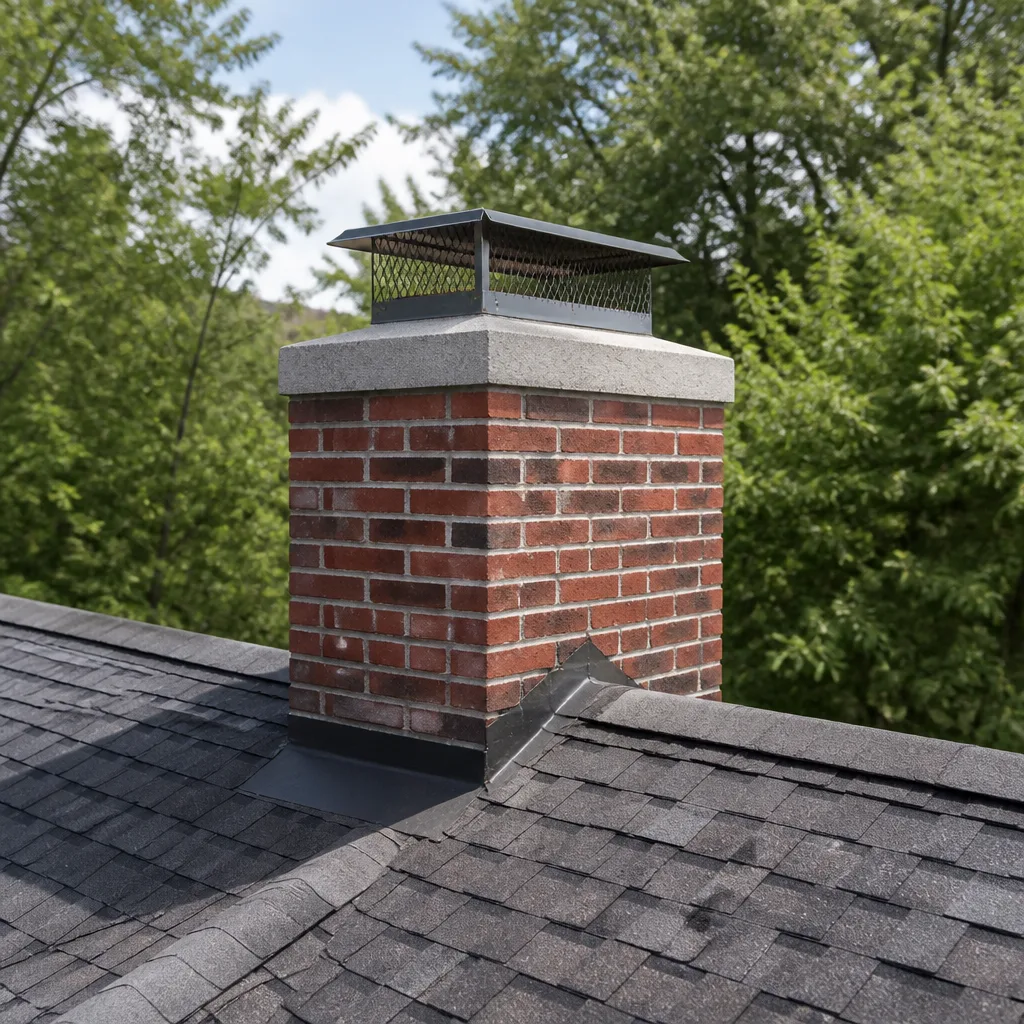
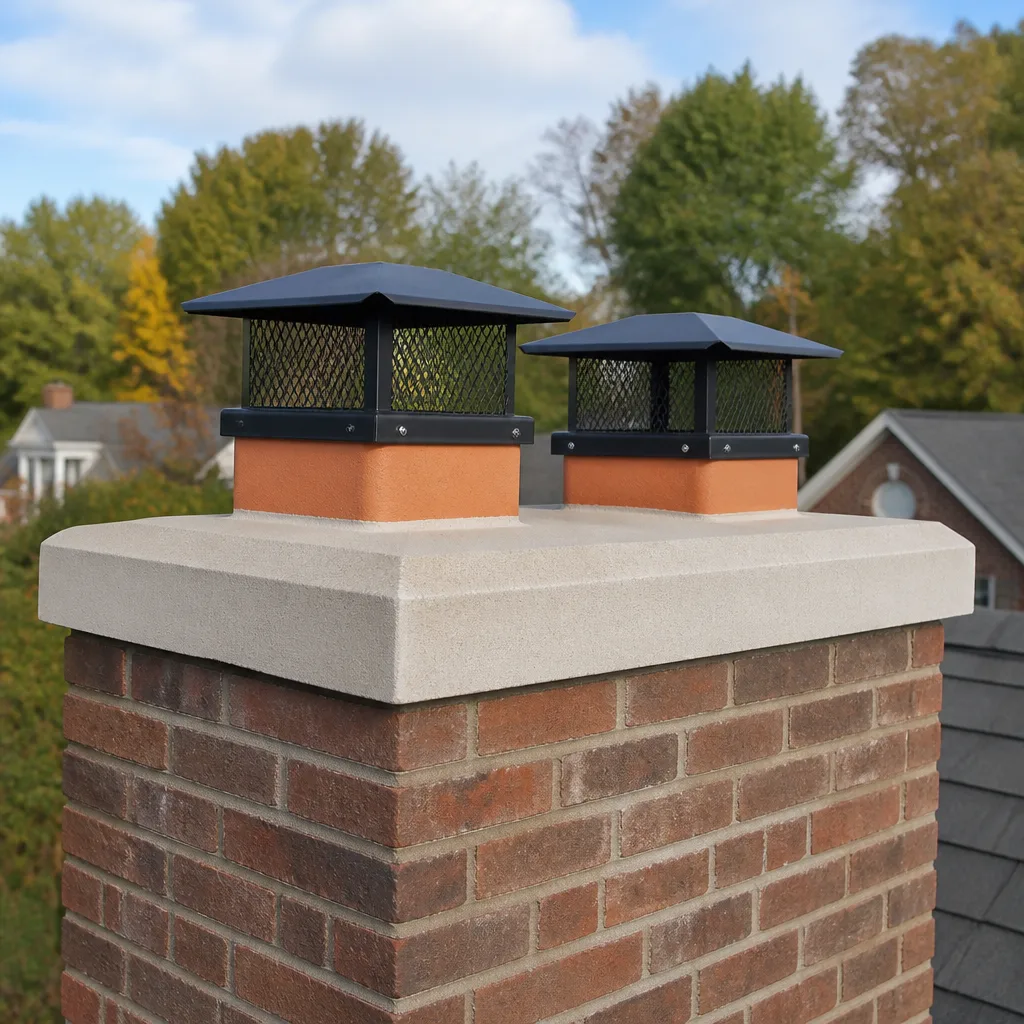
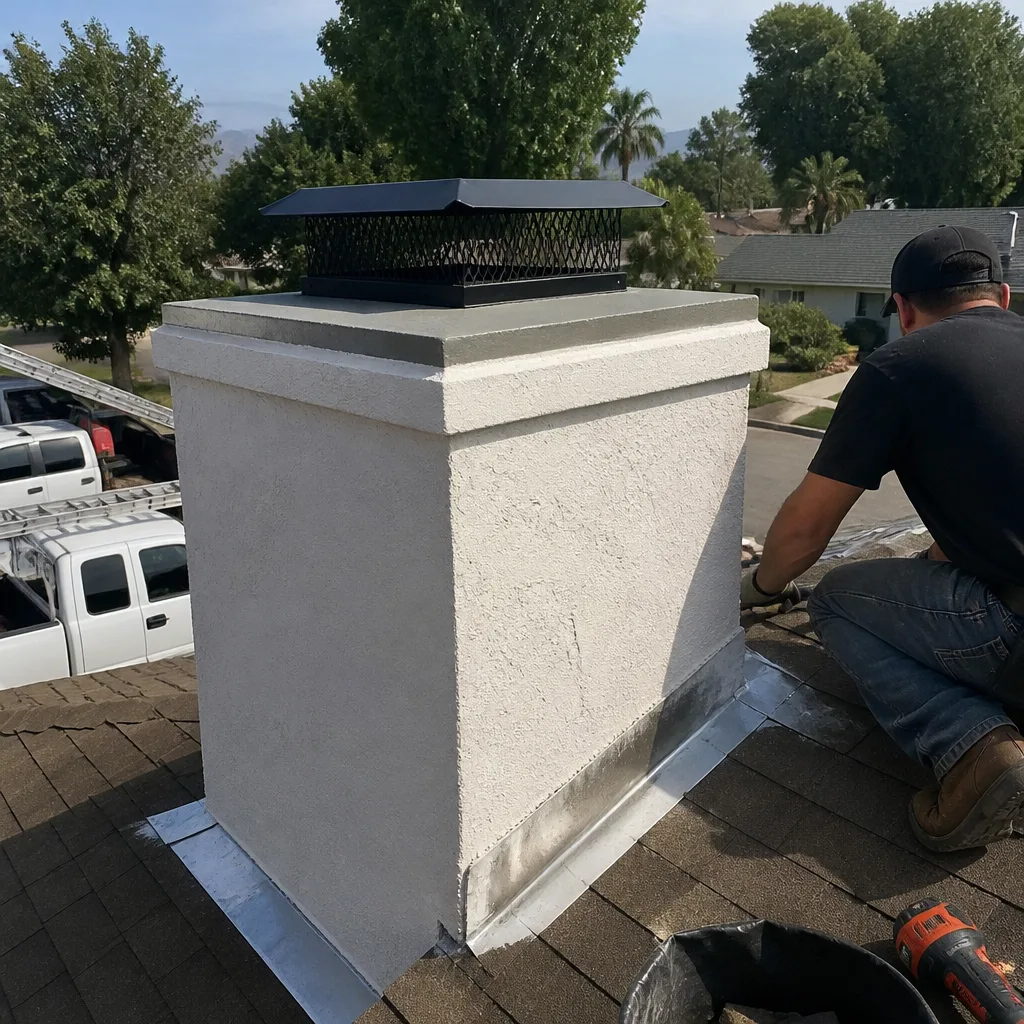
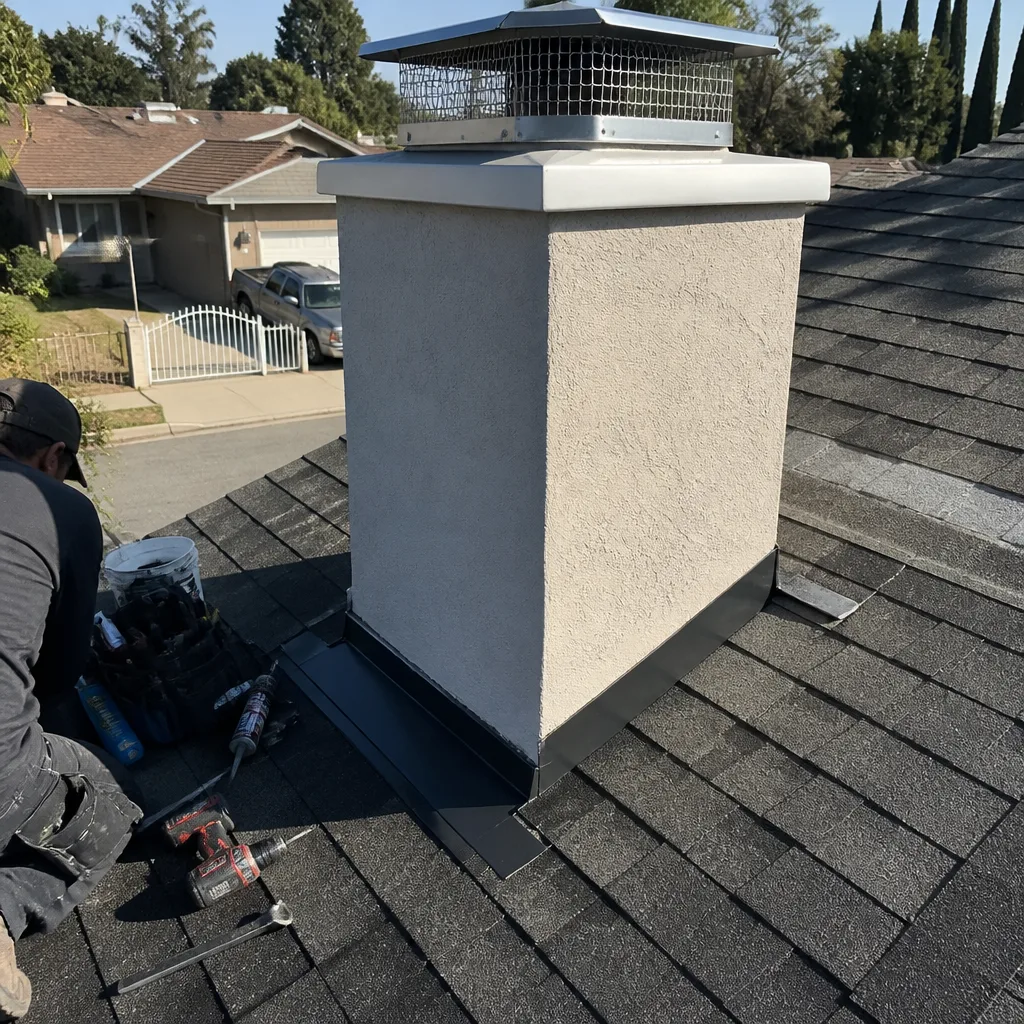
- Cap and spark arrestor check: The cap keeps rain, leaves, and animals out. The spark arrestor mesh prevents embers from escaping during Santa Ana winds. Both need to be intact and securely fastened.
- Damper operation test: A damper that doesn’t open fully makes for a smoky firehouse. One that doesn’t close fully bleeds conditioned air all fall and winter.
- Firebox inspection: Cracks in the firebox refractory panels or mortar joints are fire hazards. The firebox takes the most direct heat, and small cracks become big ones fast.
What does this cost? In the West Covina area, a standard chimney sweep typically runs between $180 and $340 depending on the height of the chimney, the level of creosote buildup, and whether it’s a standard masonry fireplace or a prefab unit. Add a camera inspection and you’re looking at another $75 to $150 in most cases. At Hadley Chimney West Covina, we give you a written price before any work starts, so there’s no surprise when the tech gets on the roof. That’s been how we’ve operated since 2003, and it’s part of Hadley Chimney West Covina home commitments, written into every job under The Relay Visibility Guarantee.
August scheduling also gives you time. If the sweep finds a cracked liner or damaged cap, you have weeks to get the repair done before you actually need the fireplace. In November, you’re making emergency decisions with a cold house and a blank calendar.
What Santa Ana Winds Do to Chimney Caps and Mesh
Santa Ana winds are the signature weather event of the burning season in West Covina. They’re hot, dry, and fast, gusting 40 to 60 miles per hour through the passes and canyons on a regular basis. For a chimney, these winds do three specific things.
First, they turn a small ember into a wildfire starter. If your spark arrestor mesh is torn, missing, or improperly sized (the mesh openings should be no larger than 5/8 inch for most installations), burning embers can exit the flue and land on your roof, your neighbor’s roof, or dry brush. During red flag warnings, this is a serious hazard, not a theoretical one.
Second, wind physically stresses the cap. Chimney caps take the full force of sustained gusts, and over time the mounting hardware loosens. A cap that’s banging or rattling in the wind is a cap that’s working its way toward the ground. We’ve seen caps lift clean off multi-story chimneys in hilly West Covina neighborhoods where wind exposure is higher.
Third, wind drives debris into the flue. Leaves, small branches, and whatever else is loose on the roof get funneled into an uncapped or poorly capped chimney. A week of gusty weather can leave a flue partially blocked before the season even starts.
Our advice from two decades of work in the San Gabriel Valley: make a visual chimney check part of your post-wind routine. After any Santa Ana event with gusts over 30 miles per hour, step outside and look at the cap. Can you see it clearly from the ground? Is it sitting straight? Is the mesh panel intact? If something looks off, a quick inspection call is cheaper than the damage a missing cap allows. This applies even if you never light a fire. An uncapped flue lets rain, debris, and animals in regardless of how often you burn.
Phase Two: Post-Rain Check (February – March)
West Covina gets most of its annual rain between December and March, often in short, intense bursts. Even in drought years, a few atmospheric river events can dump more water on your chimney in 48 hours than it sees the rest of the year combined. That water is the single biggest driver of masonry chimney damage in our area.
Here’s what rainwater does to a chimney, piece by piece:
- Flashing: The metal strips where the chimney meets the roofline are your first line of defense. Wind-driven rain gets behind loose flashing and rots the roof decking and the chimney chase. Leaks show up as water stains on the ceiling near the fireplace, or on the walls adjacent to the chimney.
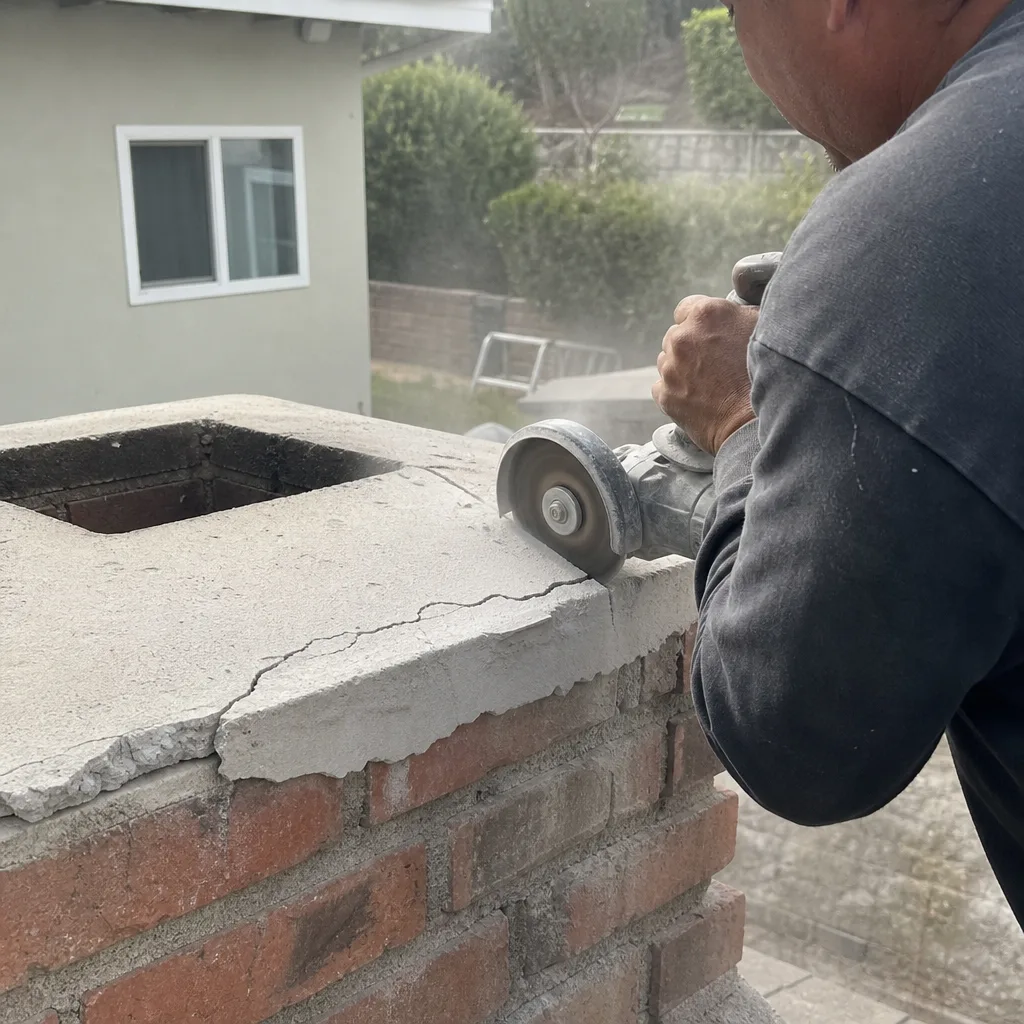
- Crown: The concrete or mortar slab at the top of the chimney is designed to shed water away from the flue. Cracks in the crown let water run down the flue or into the masonry. A crown crack that’s a hairline in February is a quarter-inch in July after a summer of thermal expansion.
- Mortar joints: Rainwater soaks into porous mortar. When temperatures drop at night, the water freezes and expands (even in West Covina, overnight temps can dip into the 30s in winter). Repeated freeze-thaw cycles over years erode mortar joints, which is how chimneys start leaning or losing bricks.
- Liner: A clay tile liner that’s already cracked lets water seep into the void between the liner and the chimney structure. Rust stains around the damper or water in the firebox after rain are the telltale signs.
The post-rain check is simple. After the last significant rain event in March or early April, do a visual inspection: look for efflorescence (the white chalky mineral deposits that water leaves on masonry), check the ceiling inside for water stains, open the damper and look up with a flashlight to see if anything looks damp or stained. If any of these are present, the next step is a professional chimney repair in West Covina assessment before the dry summer heat bakes the damage in.
Marine-Layer Moisture and Masonry Damage
West Covina sits close enough to the coast to get regular marine-layer overcast, especially in May and June. Mornings are gray and damp, afternoons burn off to sun and heat. This daily moisture-and-dry cycle is uniquely hard on exposed masonry.
Here’s what’s happening. During the marine-layer hours, moisture condenses on and absorbs into brick, mortar, and concrete surfaces. Then the afternoon sun heats those surfaces rapidly, driving the moisture out through evaporation. This repeated expansion and contraction, day after day, week after week, slowly degrades masonry. The technical terms you’ll hear from chimney professionals are efflorescence and spalling.
Efflorescence is the white powdery deposit on brick or masonry. It’s water-soluble salts being drawn to the surface as moisture evaporates. Efflorescence itself is cosmetic, but it’s a reliable signal that water is moving through the masonry. If you see it, the chimney is absorbing more water than it should.
Spalling is more serious. It’s when the face of a brick or stone flakes off, or chunks of mortar fall out. Spalling happens when water inside the masonry expands and contracts, or when efflorescence forms just below the surface and pops the face off. A spalling chimney is a structurally weakening chimney. Left alone long enough, the damage spreads from cosmetic to structural, and repairs move from repointing (filling and sealing mortar joints) into reconstruction territory.
The fix for moisture-driven masonry damage in West Covina is usually a combination of repointing damaged joints and applying a vapor-permeable water repellent to the chimney. Not a sealer that traps moisture inside (that creates a different problem), but a breathable treatment that keeps liquid water out while letting trapped vapor escape. Repointing typically runs $20 to $40 per square foot of damaged masonry in our market, and full water repellent treatment on an average chimney usually lands between $350 and $600. At Hadley Chimney West Covina, we document everything with before-and-after photos so you can see exactly what was found and what was fixed, and our Chimney Cleaning Cost Breakdown: The West Covina Homeowner’s Reference for 2026 explains typical pricing in detail.
Phase Three: Idle-Season Liner Monitoring (April – July)
The fire is out, the rain is done, and nobody thinks about the chimney for four months. That’s exactly why the idle season is when the most damage accumulates undetected. The fireplace is cold, so nothing calls attention to a problem until the first cold night in November, and by then it’s too late to fix anything without urgency.
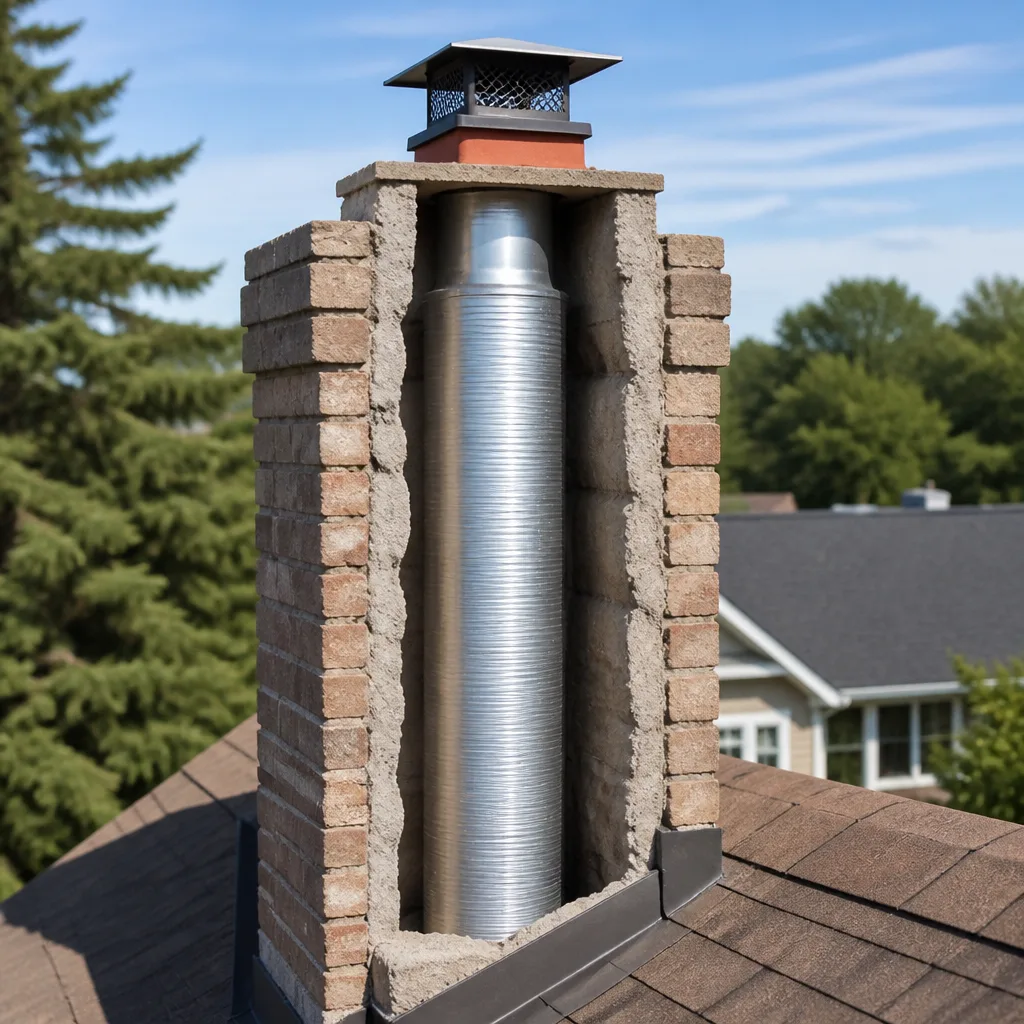
The flue liner is the component that deserves the most idle-season attention. The liner is the protective conduit inside the chimney that contains heat, smoke, and combustion gases and vents them safely outside. In most West Covina homes with original chimneys, that liner is made of clay tile, often installed in the 1960s or earlier. Clay tile liners crack. Heat stress from years of fires, water damage from rain, and even minor seismic activity (this is Southern California) all take a toll.
Here’s the problem: liner cracks spread even when the chimney isn’t in use. The thermal expansion of hot summer days and the contraction of cooler nights puts stress on existing cracks. What was a hairline in April can be a gap by September. And if an animal nests in the flue during the idle season (more on that below), the nest material holds moisture against the liner, accelerating deterioration.
The practical takeaway is this: once a year, even if you rarely burn, the flue should be checked. A camera inspection is the standard. It’s a small flexible camera run up the flue that shows the full interior surface. No guesswork. At Hadley Chimney West Covina, we include a camera inspection in our standard sweep, and we show you the footage. You’ll see exactly what we see, and nothing gets recommended without visual evidence you can look at yourself. That’s how our Chimney Sweep in West Covina service has worked since day one.
If the liner is cracked, repair options range from HeatShield cerification (a ceramic coating that restores the liner’s interior surface) to a full stainless steel liner like DuraFlex installed inside the old flue. The right solution depends on the extent of the damage, and the camera tells us which one you actually need. Sometimes the answer is genuinely “you’re fine, check again next year.” We’ll tell you that too.
Off-Season Animal Intrusion: What It Looks Like
Spring in West Covina means nesting season. Birds, squirrels, raccoons, and the occasional opossum all see an uncapped or loosely capped chimney as move-in-ready real estate. The idle season is prime time for animal intrusion because the chimney is quiet, dry, and undisturbed for months.
Here’s what to watch for between April and July, before the first fire of the year:
- Noises: Scratching, chirping, or flapping sounds coming from the chimney or fireplace. Birds are usually evident early in the morning or at dusk.
- Debris falling into the firebox: Twigs, leaves, grass, or small bits of insulation material appearing in the fireplace when you haven’t had a fire in months. This is nest construction material dropping through the damper.
- Unusual odors: A dead animal in the flue has a unmistakable smell. Nests also hold urine and droppings that create a musty, ammonia-like odor that gets worse as temperatures rise.
- Flies or small bugs in the home: Insects hatched from an animal carcass or organic nest material often find their way into living spaces around the fireplace.
- Visual clues from outside: Bird activity concentrated around the chimney top, or twigs visible protruding from the cap or flue opening.
If you see any of these signs, don’t light a fire. A nest in the flue is a fire hazard and, if an animal is still inside, a fire will kill it (slowly and cruelly) or force it into your living room, both of which are outcomes worth avoiding. The standard solution is a professional animal removal, followed by a flue cleaning, followed by installation of a durable cap with proper mesh. For gas fireplaces in West Covina, this is also a common entry point for nests blocking vents on gas fireplace repair in West Covina calls we handle. The pattern is always the same: no cap, no mesh, animals move in, owners discover it in November.
A chimney cap with 5/8-inch stainless mesh is the standard fix. It’s what we install on every sweep and repair job where the cap is missing or undersized. It’s a one-time fix that ends the cycle.
Common Mistakes to Avoid
- Waiting until November to schedule a sweep. Every sweeps company in the San Gabriel Valley is booked out by mid-October. August scheduling gets you a clean flue and any needed repairs done before the rush.
- Assuming no fires means no problems. Rain, wind, animals, and temperature swings damage chimneys year-round. A fireplace that never gets used still needs an annual check, especially for the liner and cap.
- Ignoring a missing or damaged spark arrestor. During Santa Ana conditions, an uncapped or open-mesh flue is an ember exit point. This is a wildfire safety issue, not a cosmetic one.
- Sealing masonry with the wrong product. A non-breathable sealer traps moisture inside the brick, which actually accelerates spalling in West Covina’s marine-layer mornings and hot afternoons. Only vapor-permeable repellents should ever be used.
- Lighting a fire without checking for nests. If animals moved in during the idle season, that first fire of the year is a chimney fire waiting to happen. Check the flue and firebox visually before the first burn, every single year.
- Skipping the post-rain check. Leaks from damaged flashing or a cracked crown don’t announce themselves on a Tuesday. They show up as ceiling stains six months later. Check after the last rain event in spring.
- Hiring on price alone. A chimney sweep that’s $80 cheaper but skips the camera inspection, doesn’t document the work, and gives a verbal quote that changes when the tech arrives is going to cost more in the long run. A written price and photo documentation should be non-negotiable.
When to Call a Professional
Some things you can handle with a flashlight and a willingness to look up. Others are genuinely dangerous. If you see any of the following, stop and call a professional before doing anything else: strong creosote smell in the house even when no fire is burning, visible smoke leaking from the chimney into the living space, water in the firebox after rain, chunks of brick or mortar on the ground around the chimney base, a cap that has shifted or fallen, or any animal activity inside the flue. These are not DIY situations. Chimney work involves heights, structural pressure, and combustion safety, and the consequences of getting it wrong are severe. Hadley Chimney West Covina offers free estimates and a written price before any work begins. Call (661) 402-9036 and a live person answers, any time, day or night.
Frequently Asked Questions
A standard chimney sweep in West Covina typically costs between $180 and $340, with camera inspection adding roughly $75 to $150. Prices vary based on chimney height, creosote buildup level, and whether the chimney is masonry or prefab. Call (661) 402-9036 for an exact quote. Estimates are free, and we give you a written price before any work starts.
Once a year, even if you only burn occasionally. The National Fire Protection Association recommends annual inspection regardless of use, and West Covina’s Santa Ana winds, rain patterns, and idle-season animal activity make that standard especially relevant here. Ready to schedule? Call (661) 402-9036.
The only way to know is to see the liner yourself with a camera inspection. At Hadley Chimney West Covina, we show you the footage and walk you through exactly what the cracks mean, and what the repair options cost. Every liner recommendation comes with visual evidence, and our written guarantee covers every repair. If a company recommends a liner without showing you the inside, get a second opinion. Call (661) 402-9036 and we’ll explain what we’re looking for, free.
Creosote builds up, the liner cracks spread, the cap loosens, animals move in, and water gets into the masonry. The combined result is an increased chimney fire risk, possible carbon monoxide leakage into the home, and escalating repair costs. What starts as a $250 sweep becomes a $4,000 liner replacement or a $6,000 masonry rebuild after enough neglect. Call (661) 402-9036 before it gets there.
Yes, and for a simple practical reason: no backlog. In August, we’re scheduling within days, not weeks. By November, the wait stretches to three weeks or more. Getting the sweep and any repairs done in late summer means you’re ready the first night the temperature drops. Call (661) 402-9036 to set up your August appointment.
A professional sweep uses drop cloths, industrial vacuums, and HEPA filtration to keep soot and dust contained. At Hadley Chimney West Covina, our uniformed, background-checked technicians leave the work area cleaner than they found it, and our crews document the work with before-and-after photos as part of our standard process. Questions about our process? Call (661) 402-9036.
We don’t recommend it. Chimney sweeping requires working on a roof, handling brushes that must be properly sized to the flue, and understanding what to look for in the liner, cap, damper, and firebox. High-tension components, vertical work, and combustion safety are all involved. A missed crack or an improperly replaced cap creates a fire or CO risk you can’t see until something goes wrong. Let a trained professional handle it. Call (661) 402-9036.
The Bottom Line
West Covina’s chimney year works in three phases: prep by September, survive the Santa Ana burn season, and inspect after the rain. Summer is not a vacation from chimney care. It’s when the next year’s problems are quietly forming, which is why the homeowners who schedule in August are the ones who never face a November emergency. The economics are simple: a $250 seasonal sweep beats a $3,000 liner repair, and a $350 cap installation beats a $1,500 animal-removal plus damage bill. Know your three seasons, check your cap after every wind event, and if you’re not sure what you’re looking at, call a professional who will show you the camera footage and give you a written price before anyone touches anything. That’s what any chimney company in West Covina should do, and it’s what we’ve done since 2003. For more guides & resources, visit our blog.
Written by Cory Mitchell, Owner at Hadley Chimney West Covina, serving West Covina since 2003.
See the difference
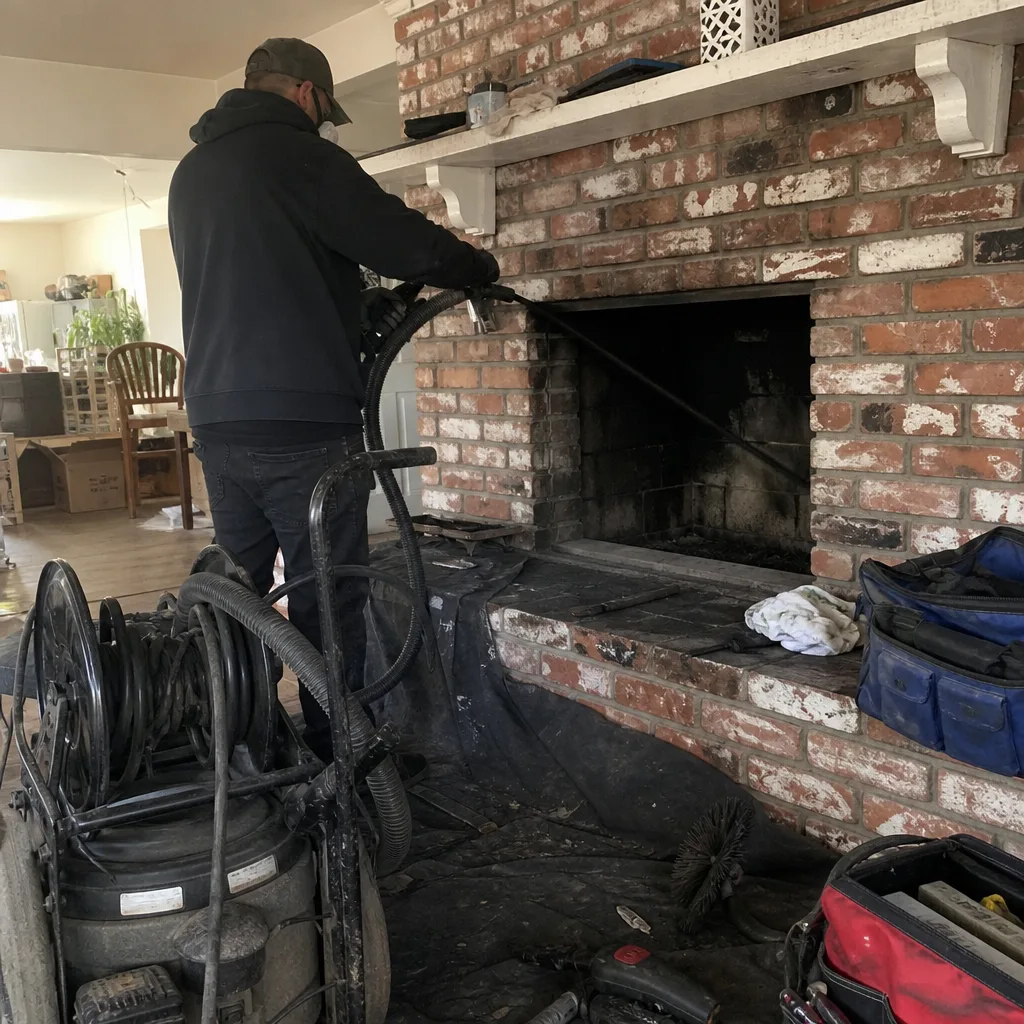 Before
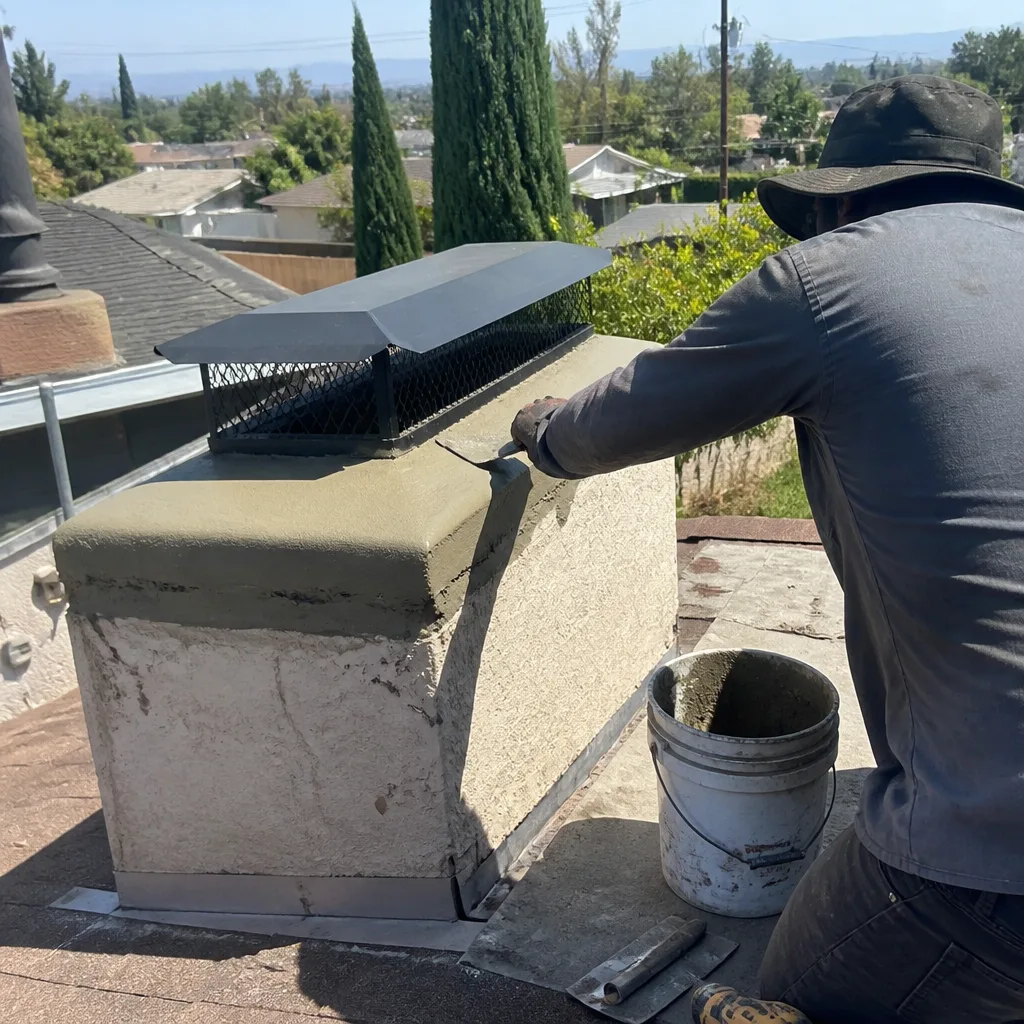 After
After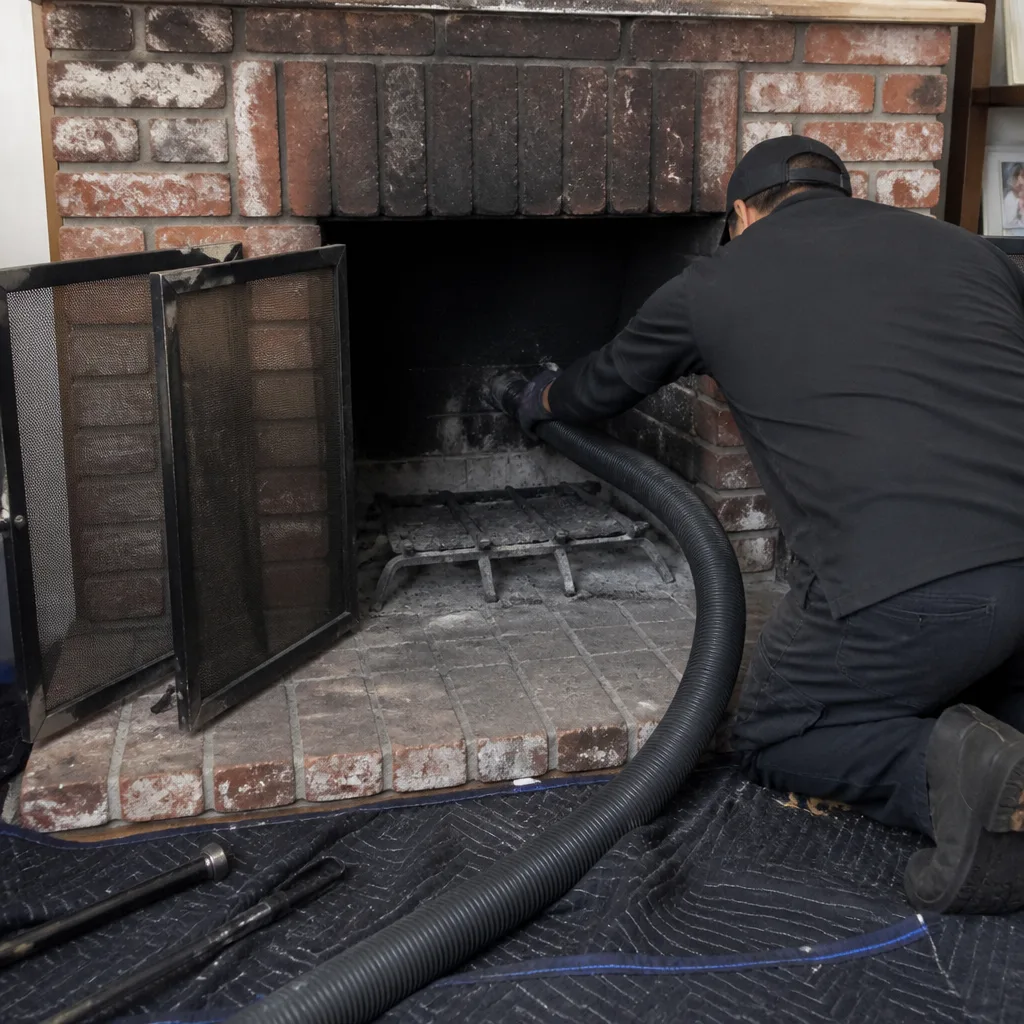 Before
 After
After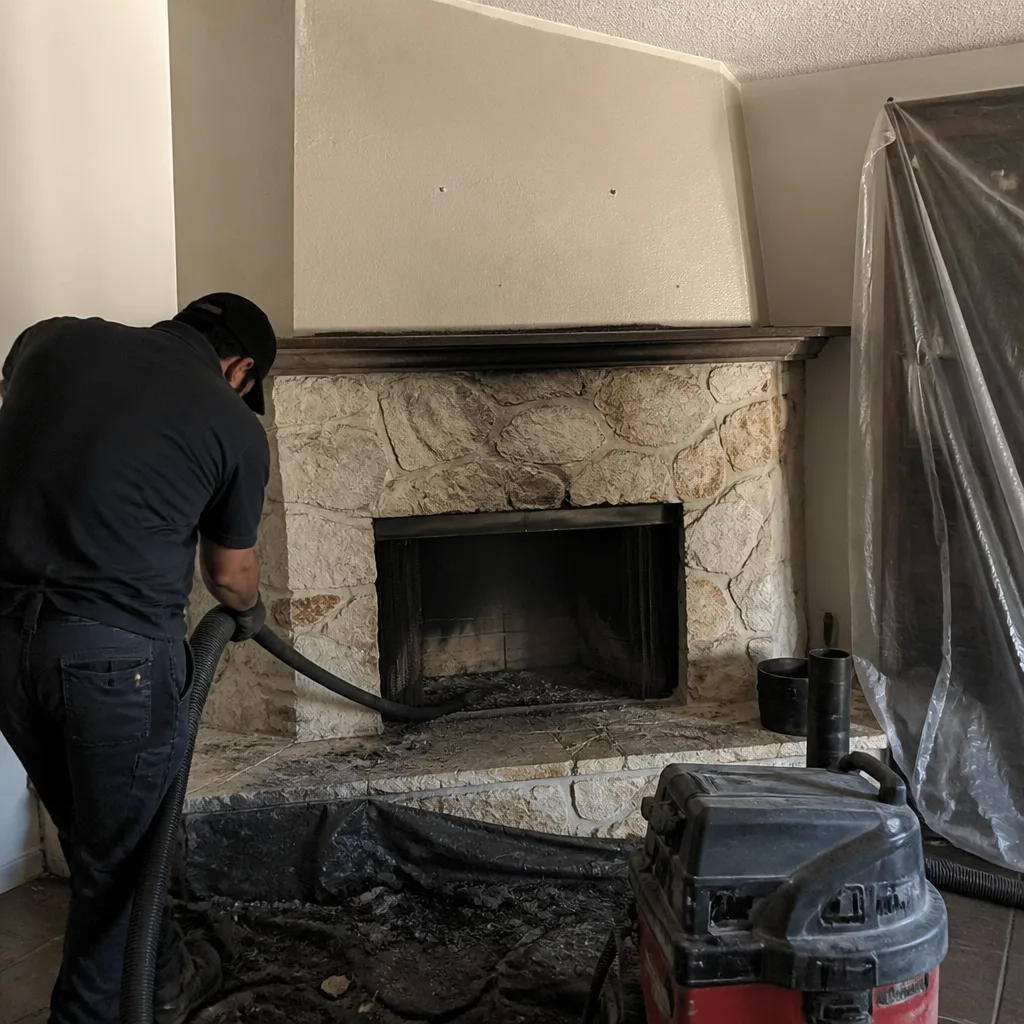 Before
 After
After