
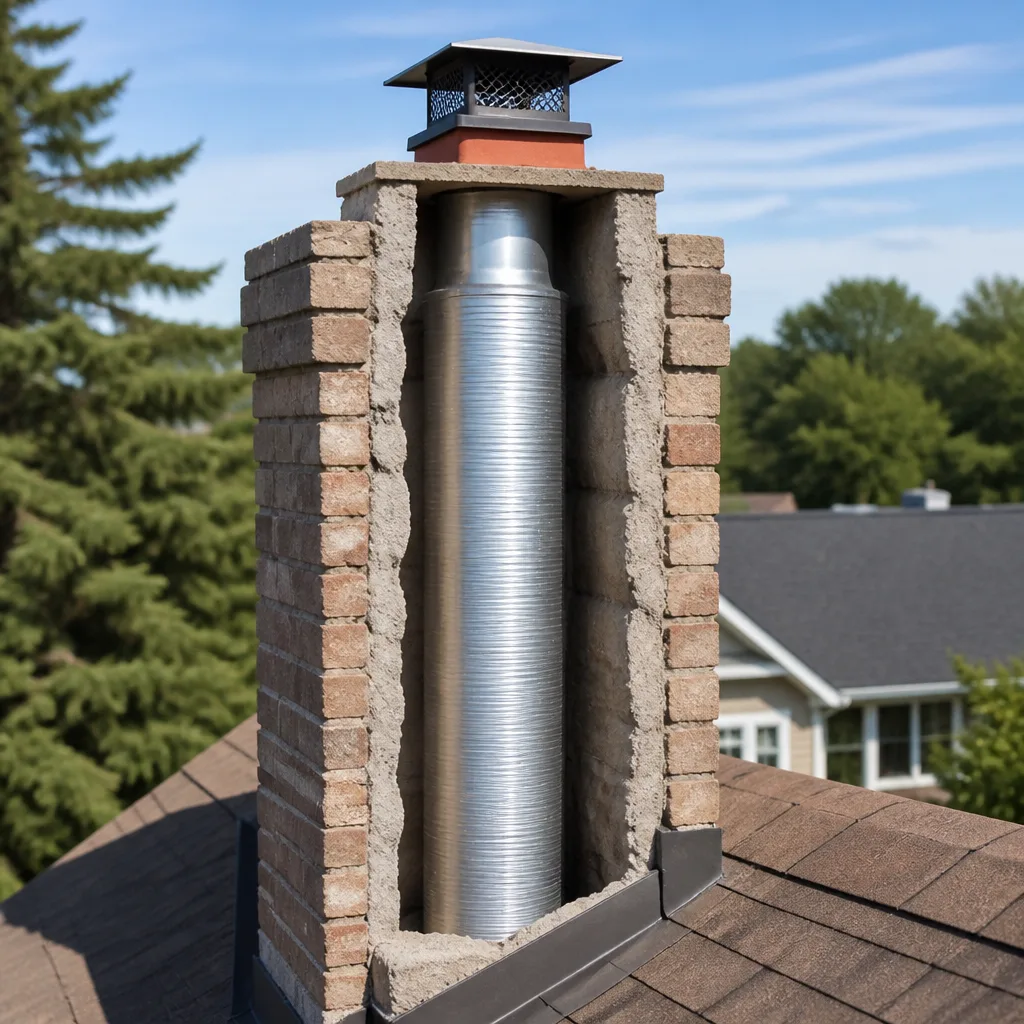
 Flue relining
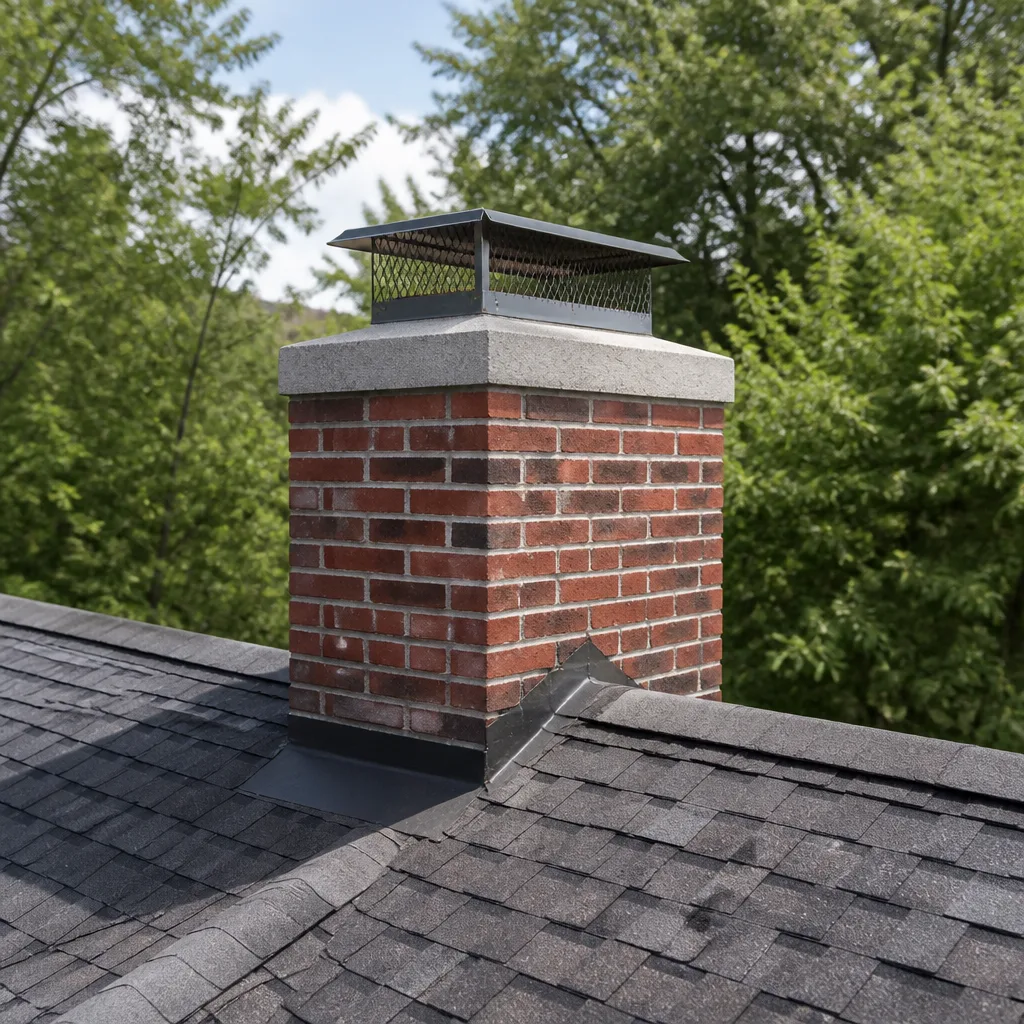 Sweep & inspection
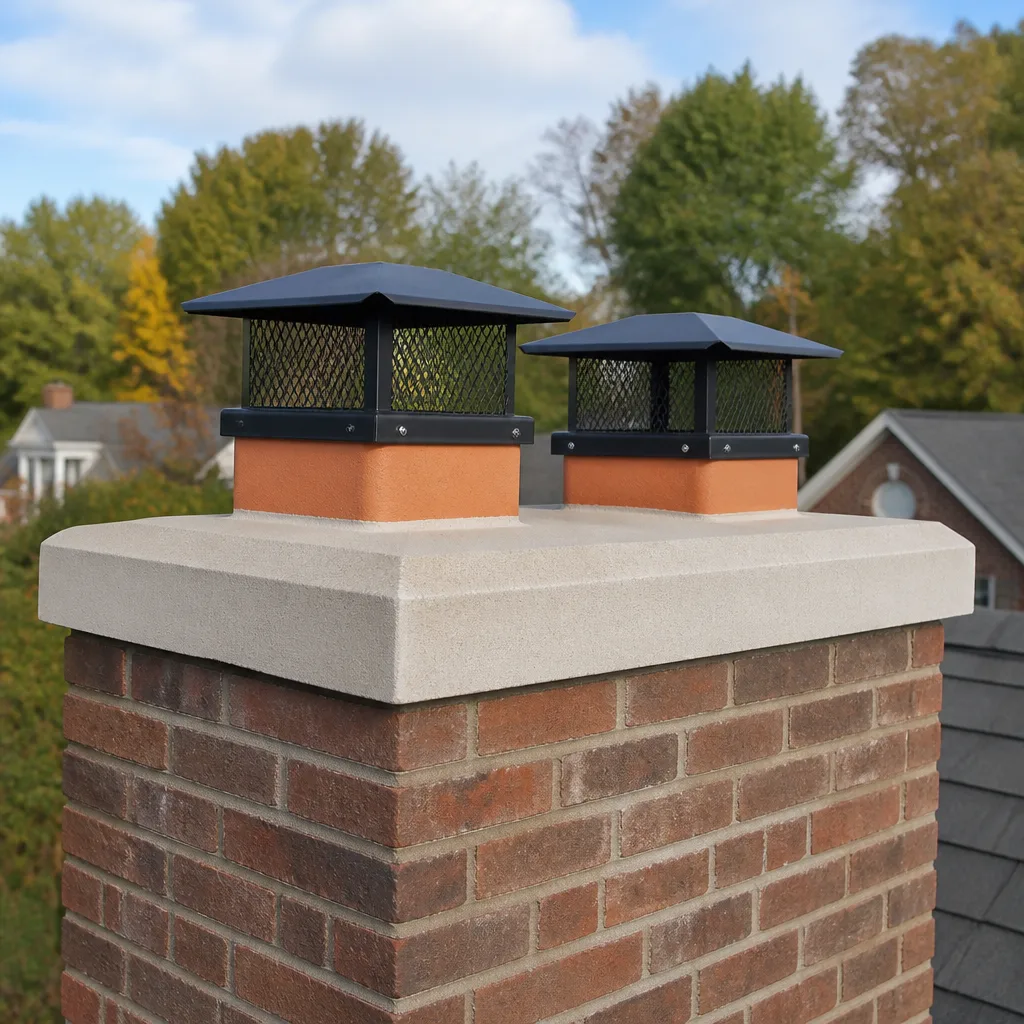 Caps & crowns
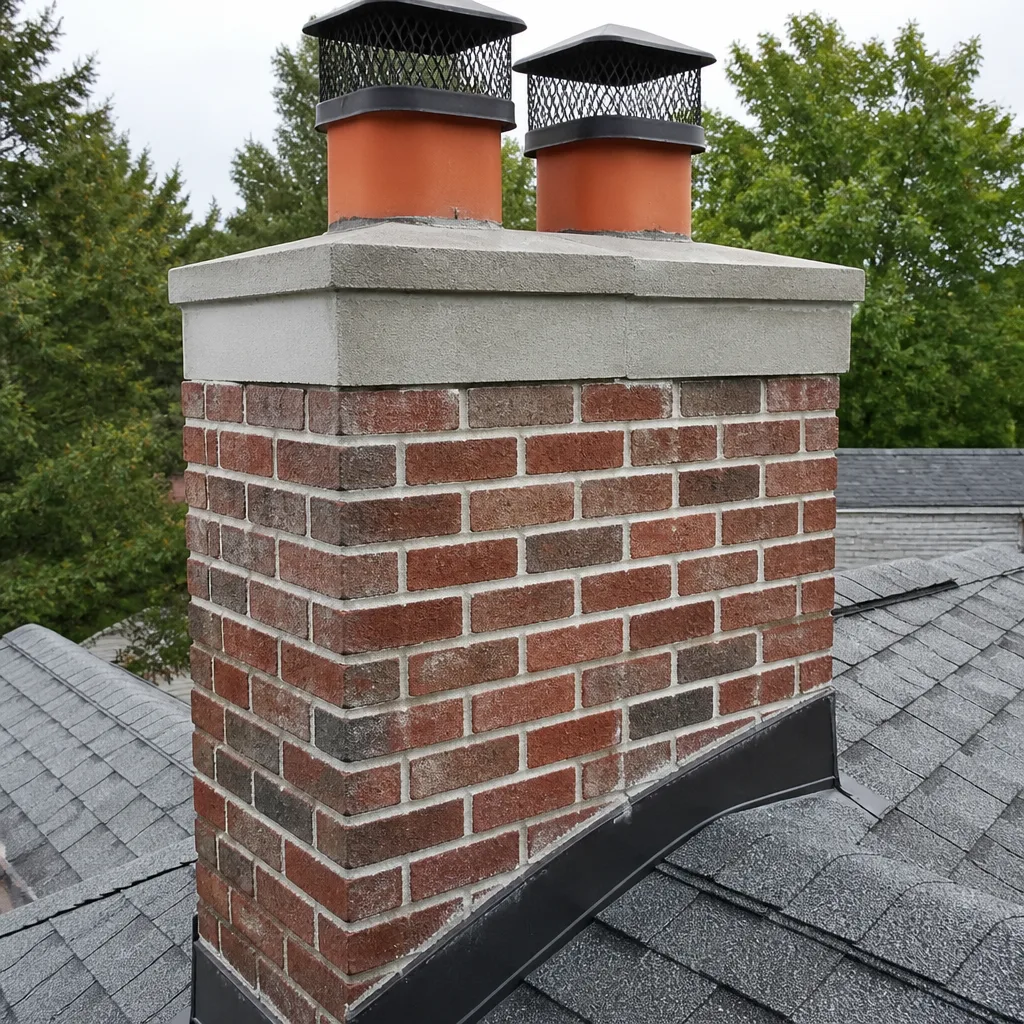 Masonry repair
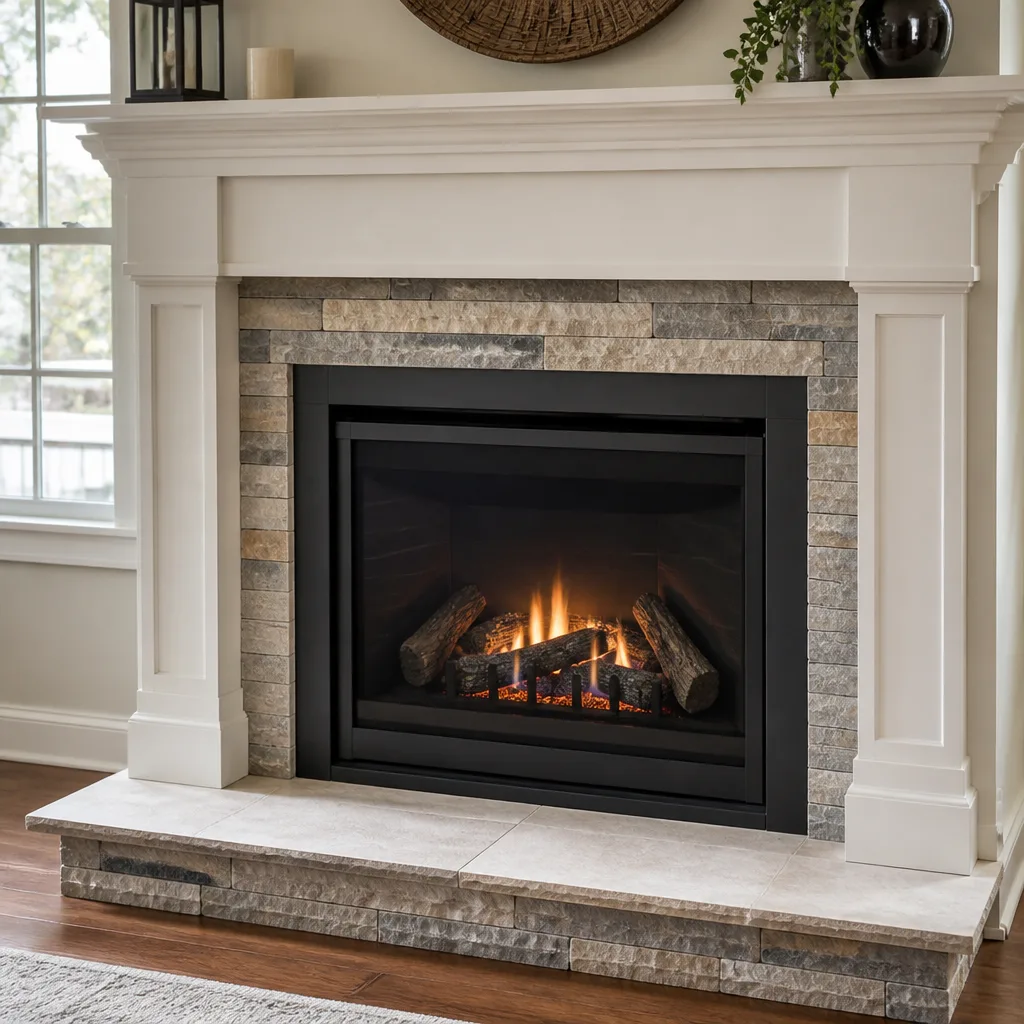 Gas fireplace service
Level 1 sweep and inspection to the NFPA 211 annual standard - flue, crown, cap, and flashing checked and photographed
Chimney sweep logs do not sweep chimneys. They loosen some creosote - which then falls where a brush and vacuum still have to collect it.
Famco Flue Liner Replacement: The West Covina Owner’s Guide
If your Famco flue liner has cracked, warped, or rusted through, we replace it with a properly matched stainless steel liner, and in most West Covina homes the installed cost runs between $1,800 and $3,400 depending on flue height, roof pitch, and whether we’re swapping a full liner or a section. We stock Famco-compatible liner components on our trucks, so when Cory and the crew show up in West Covina, we’re ready to measure, quote, and in most cases complete the job the same day. You’ll usually discover this problem the same way most of our customers do: water staining on the ceiling near the chimney, a rust-colored drip in the firebox, or flaking metal coming down the flue when you close the damper.
Here’s the thing: a failed flue liner isn’t a cosmetic issue. The liner is the only barrier between hot flue gases, including carbon monoxide, and the wood framing inside your walls. When it fails, you’re not just losing efficiency; you’re giving those gases a path you never intended them to have.
Which Famco Models This Applies To
Famco made stainless steel chimney liners and components for years, most commonly found in 5.5-inch, 6-inch, and 8-inch inner diameters, and the parts we replace most often are the liner sections themselves, the top plate, and the rain cap assembly. If your home was built between roughly 1985 and the early 2000s here in West Covina, there’s a decent chance the original liner was a Famco product, especially in tract homes where builders standardized on one supplier.
The identifier you need is not complicated. Look for a small metal tag wired to the liner near the top, just below the cap. It’ll show the model or series number and the diameter. No tag? We measure the inside diameter of the existing liner with a caliper, and that number gets us the match. You don’t need to know your Famco series number before you call. You need a technician who can measure on-site and not try to talk you into a system you don’t need.
One compatibility gotcha we see in West Covina regularly: Famco liners from that era often used a crimped-end connection that does not play nicely with every modern aftermarket liner. If someone tries to mate a generic liner to a Famco top plate or tee with sheet-metal screws and hope, you’ll get a gap that leaks flue gas and condensation. We use only proper Famco-compatible fittings or verified direct-fit replacements from DuraFlex and Copperfield, which our suppliers cross-reference by diameter and connection type. This matters more than people think.
OEM versus aftermarket: for Famco specifically, new-old-stock OEM liner sections exist but are increasingly hard to source. In practice, a quality stainless 316L liner with matching diameter and connection style, from a brand our trade actually trusts, performs as well or better than the original. We’ll tell you exactly what we’re quoting and why, including the alloy grade. You shouldn’t have to take anyone’s word on materials.
Hadley Chimney West Covina is an independent chimney service provider, not affiliated with Famco. We install and replace Famco liners and compatible components, and we do not represent the manufacturer.
Styles & brands we work with
Signs Your Famco Flue Liner Replacement Is Failing
- Water in the firebox after rain. This usually means the top plate or cap seal has failed, or the liner itself has rusted through at a seam. Water runs down the inside of the flue and pools on the smoke shelf before dripping into the firebox.
- Flaking metal or rust chips falling onto the damper. That’s liner material. When stainless corrodes or the inner wall delaminates, small pieces break loose and wind up at the lowest point of the flue, which is exactly where you noticed them.
- Brown or rust-colored staining on the ceiling or wall around the chimney chase. Condensation containing creosote (the flammable tar byproduct of wood smoke) has found its way past the liner and into the surrounding framing or drywall. By the time it’s visible on the ceiling, the leak has been active for a while.
- A smell like a damp campfire in the room with the fireplace, even when nothing’s been burned recently. That’s creosote-saturated condensation inside the flue. A cracked liner holds moisture against the chimney wall, and the odor bleeds through.
- Excessive smoke backing into the room when a fire is lit. A fractured liner disrupts the draft that pulls smoke up and out. If the draw has gotten noticeably worse and the damper is fully open, the liner is on the short list of causes.
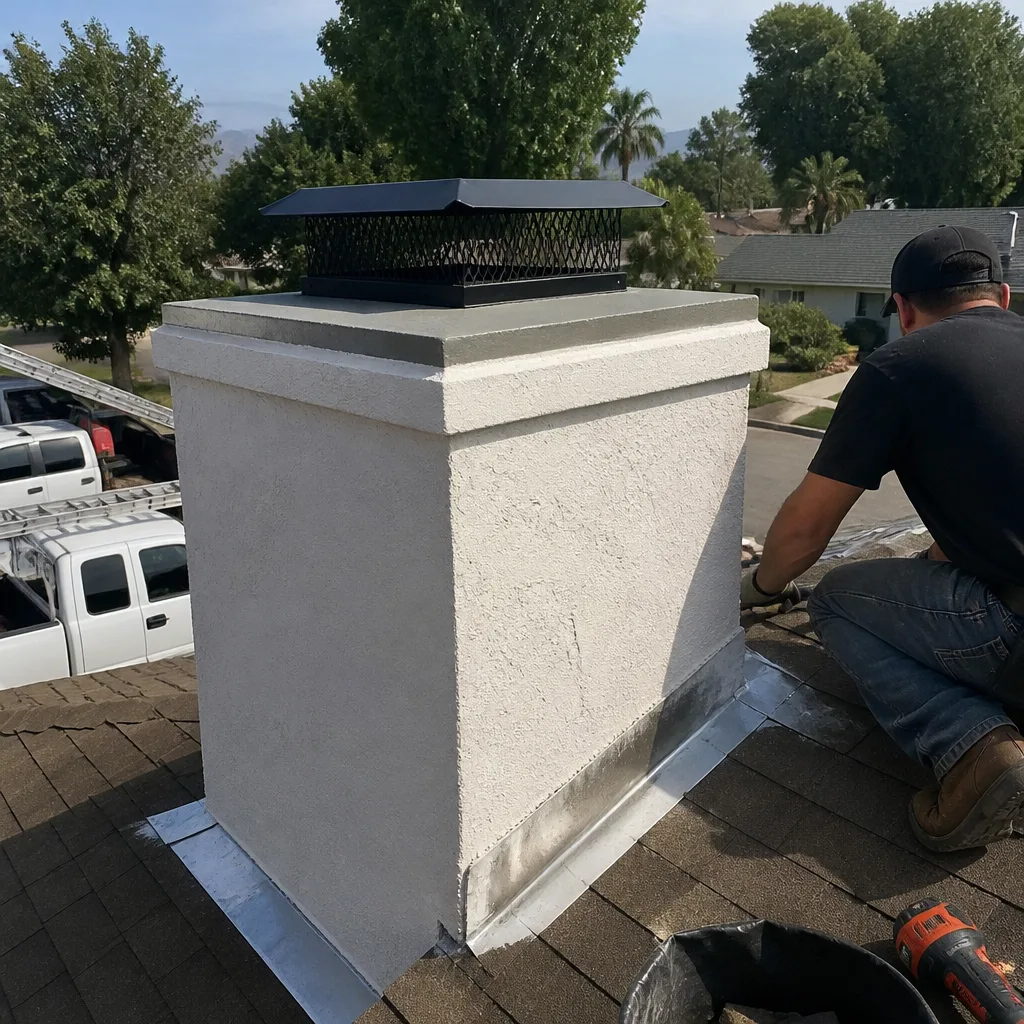
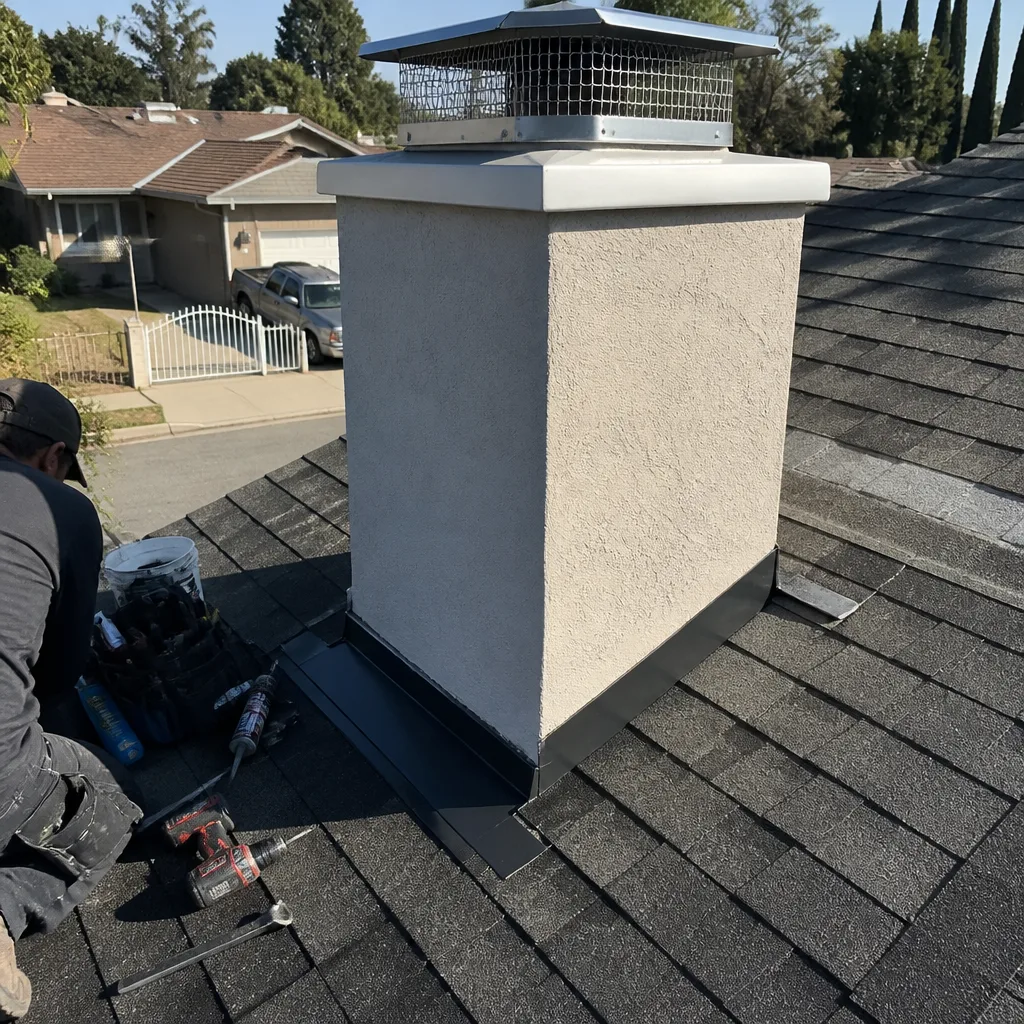
See the difference
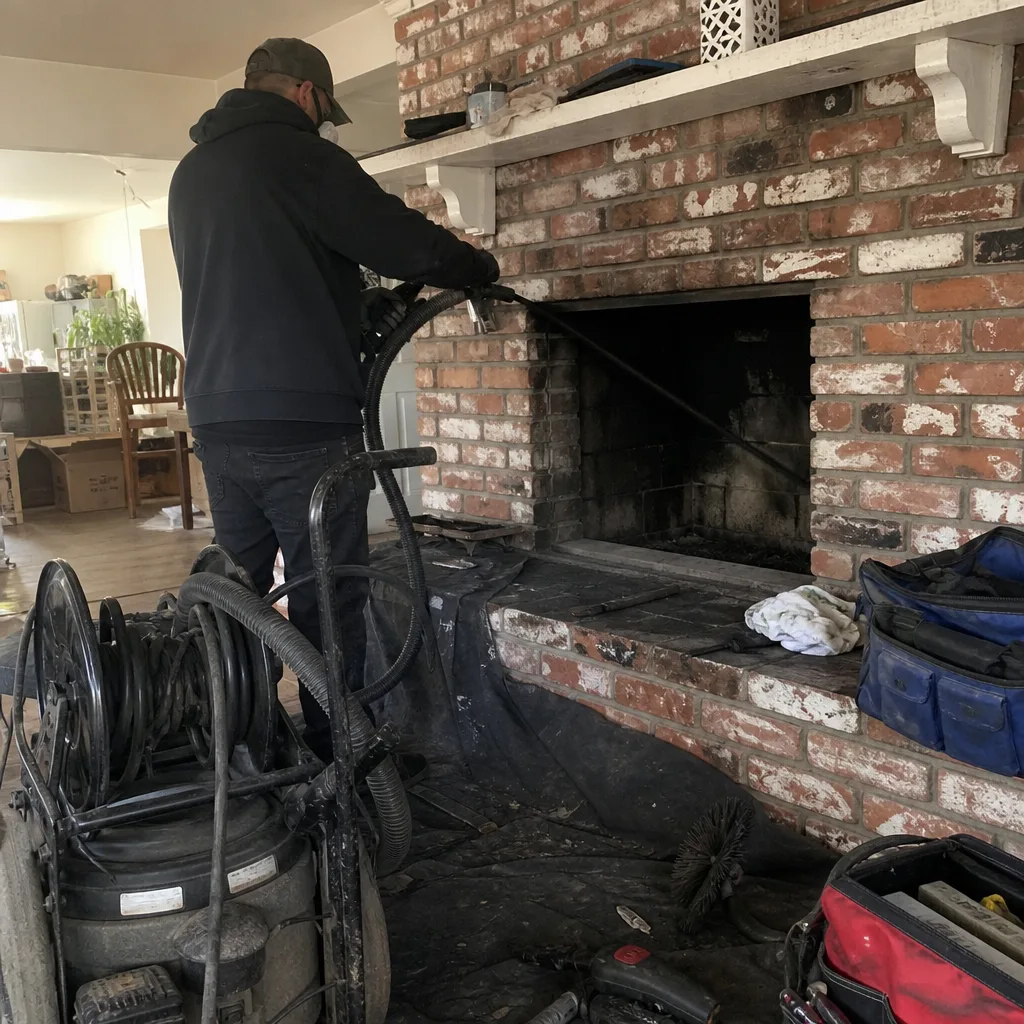 Before
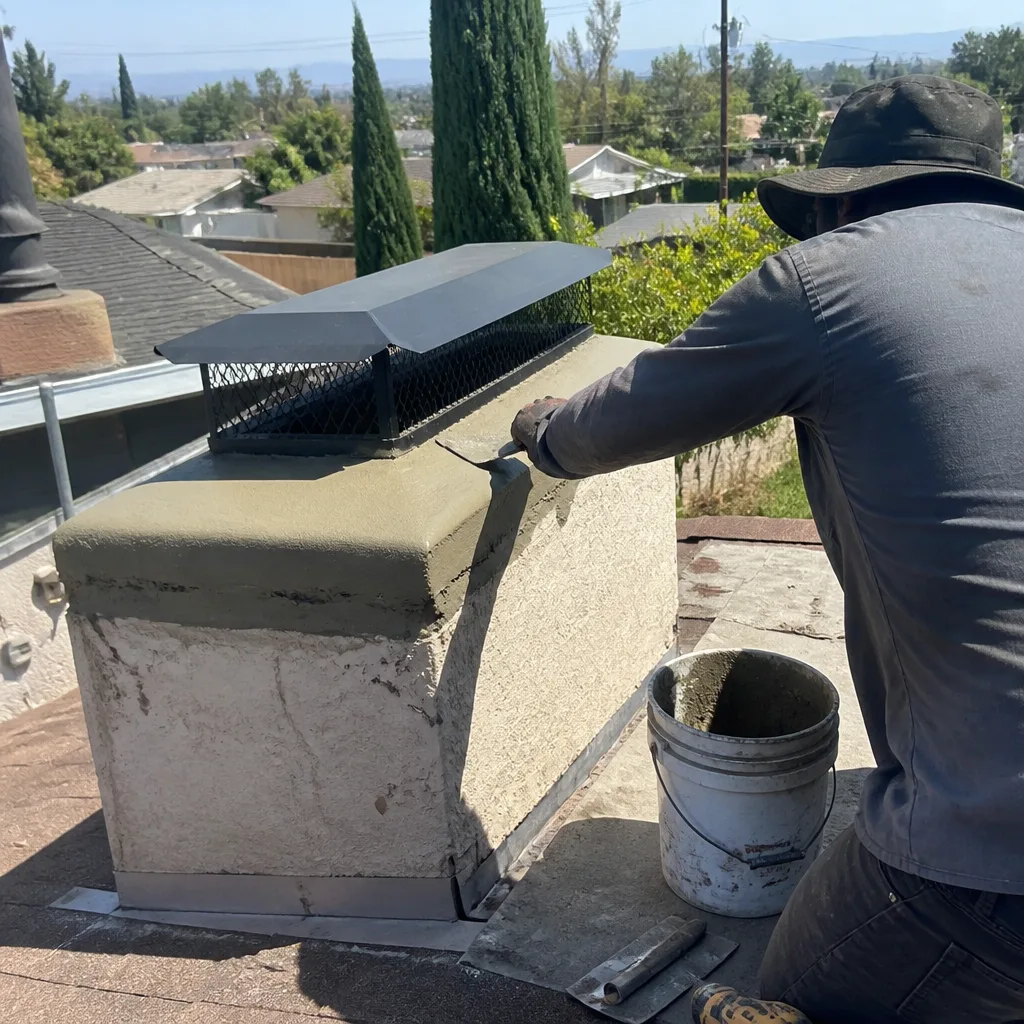 After
After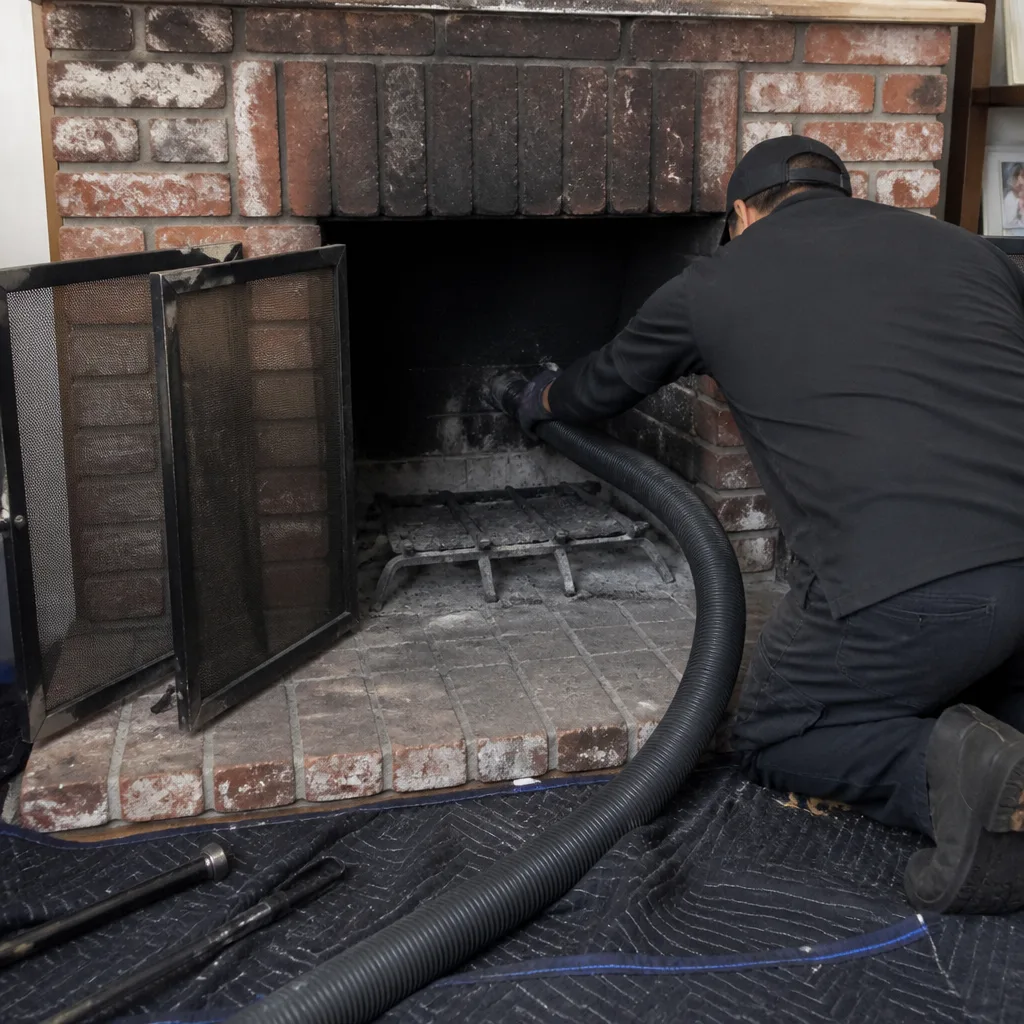 Before
 After
After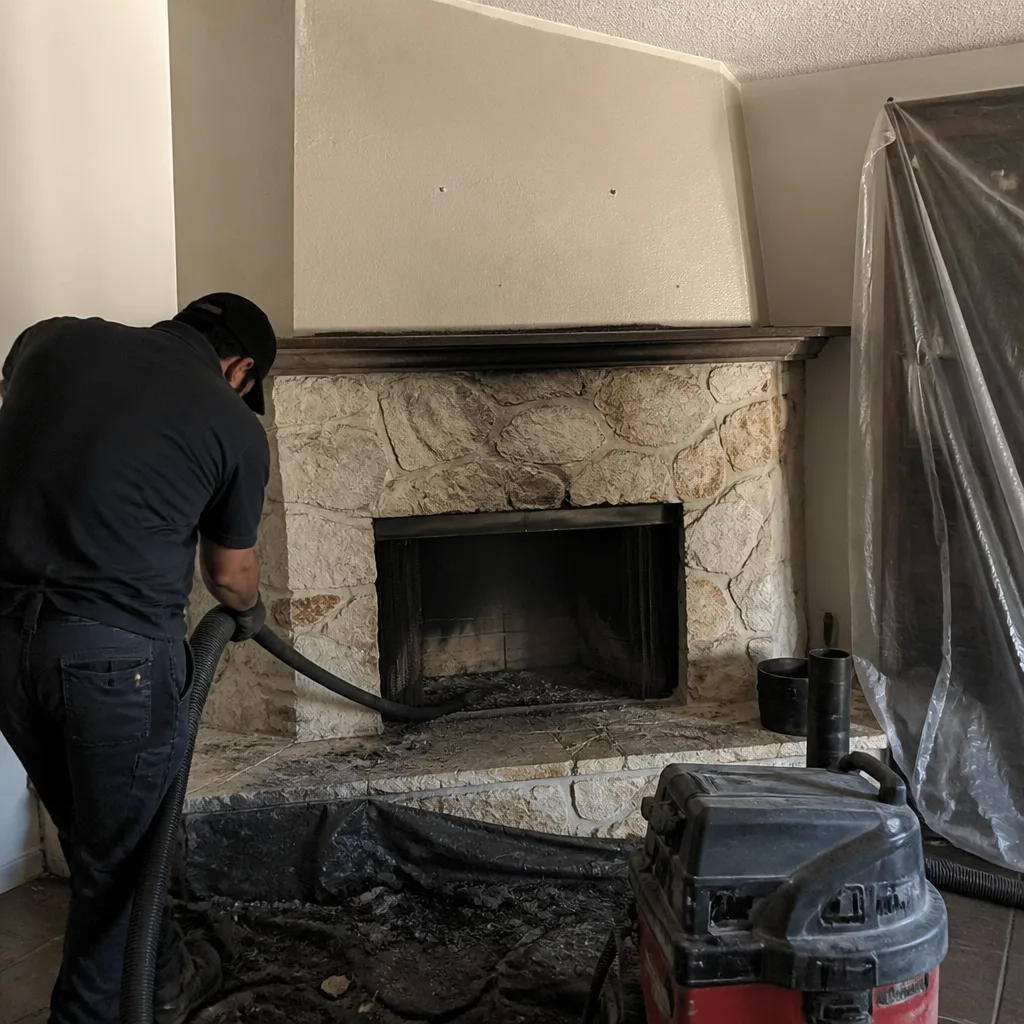 Before
 After
AfterReplacement Cost & What’s Included
Let’s talk real numbers for West Covina. A straightforward full liner replacement for a single-story home with an easy roof usually lands between $1,800 and $2,600 installed. A two-story home, a steep or tile roof, a chimney that needs staging, or a liner that has to be fished through a narrow or offset flue pushes the job to $2,800 to $3,400. We write the exact price before any work starts, and that price doesn’t change once we’re on the roof. That’s not a promotion; it’s how every job starts.
What you’re paying for: the liner material itself, the top plate, cap, and connectors, removal of the old liner (staging and rigging included where needed), installation, and a camera inspection after the job so you can see the new liner seated correctly, end to end. You’ll get before-and-after photos, because that’s standard for us. And like every repair we do in West Covina, the work carries our 365-Day Done Right Promise in writing: if it fails within a year, we come back and make it right, free of charge. No paperwork haggling, no “that’s not covered” conversation.
DIY or Call Us?
Here’s the honest split. What you can safely do: inspect what you can see from the top of the firebox, or step outside and look at the cap with binoculars if your roofline allows. If you see rust, gaps, or a tilted cap, that’s useful info for the phone call. What we strongly suggest you not do: pull the liner yourself. The liner is wedged inside a masonry flue, it’s heavy, and in many West Covina homes the original install used friction fit with heat-expanded clamps that do not respond gracefully to a ladder and a pry bar. You’re working at height, often against a chimney that doesn’t have a proper anchor point, and you’re one slip away from a bad afternoon. This is the part of the chimney system where an amateur swap creates a gap you can’t see from the ground, and that gap becomes a carbon monoxide concern before you ever notice a draft problem.
Cory grew up in Los Angeles and learned the trade at L.A. Trade Tech before spending close to two decades inside fireboxes and on rooftops across the San Gabriel Valley. When you call our crew, we do the measuring and the matching. If you want to see the problem first, you’ll get photos before you’re asked to decide anything. Call (661) 402-9036 and we’ll schedule a time, walk you through what we find, and give you the written price before anything gets dismantled.
FAQs
A stainless liner in West Covina’s climate typically lasts twenty to thirty years, but that number drops if the chimney was exposed to repeated creosote fires, if the cap failed and water sat inside, or if the original install left the liner touching the masonry and holding moisture. If the liner’s from the ’80s or ’90s and you’re seeing rust or flaking, it’s done its job.
Sometimes, if the damage is limited to a small section near the top or a failed seam that hasn’t spread. But most of the Famco liners we encounter in West Covina that are showing active symptoms have corrosion at multiple points, and replacing only the visible damage buys you a year, not ten. We’ll show you the camera footage and let you decide, but we’ll also tell you plainly when a repair isn’t worth your money.
Most single-story homes in West Covina are a one-day job. Two-story homes with steep rooflines or difficult staging can run a day and a half. We’re happy to give you the straight answer once we’ve seen the roof.
We carry Famco-compatible liner sections, top plates, caps, and connectors in the common diameters, plus equivalent parts from DuraFlex, HeatShield, and Gelco for cross-matching. If the match requires something specific we don’t have on hand, we source it through our supply network and get the job scheduled, not delayed indefinitely.
Usually not, unless the liner damage was caused by a covered event like a chimney fire or a tree hitting the chimney. Routine wear, rust, and age-related failure are maintenance items that most policies in California treat as homeowner responsibility. We document every liner we remove with photos so if your carrier does accept a claim, you’ll have the evidence.
Written by Cory Mitchell, Owner, Hadley Chimney West Covina at Hadley Chimney West Covina, serving West Covina and nearby areas.